How it connects
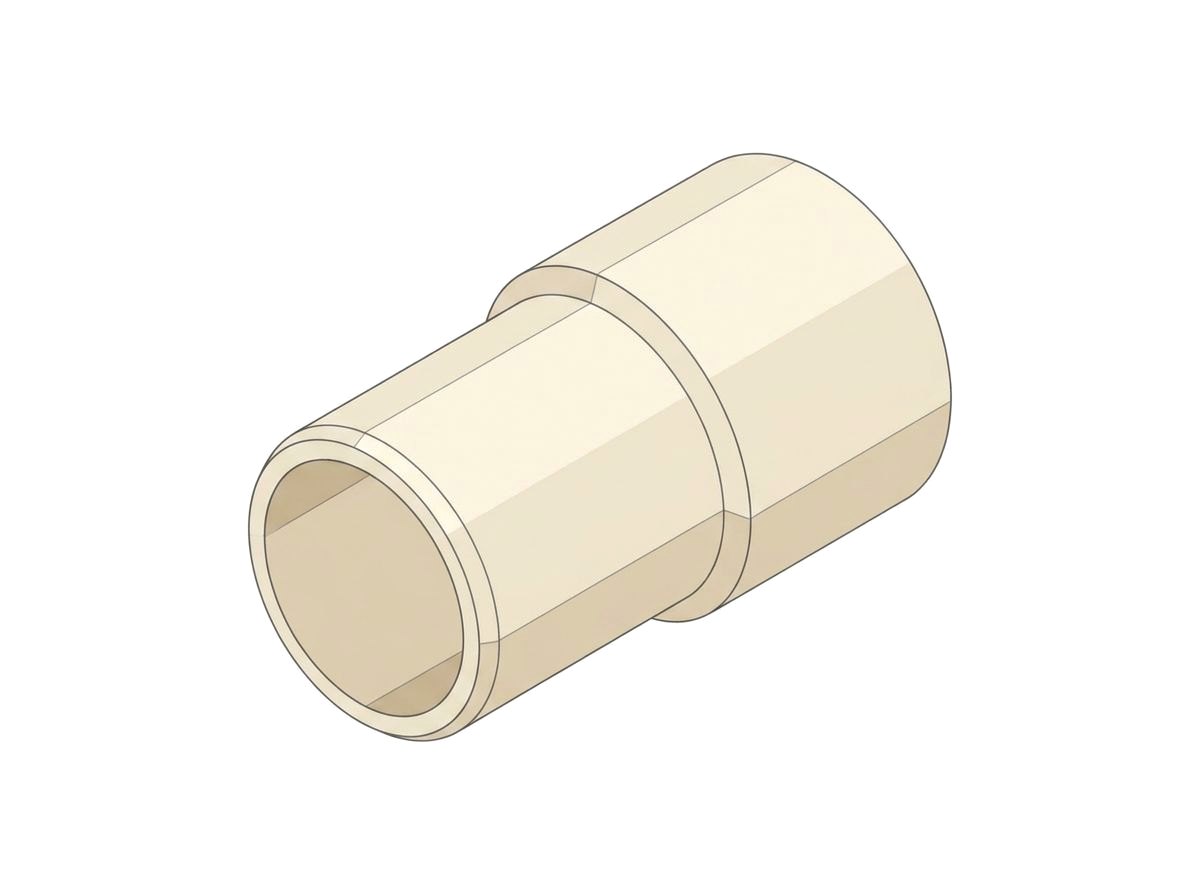
The prepared pipe end is inserted into a matching socket with CPVC solvent cement. The cured solvent-weld joint provides retention and sealing; follow the system manufacturer’s preparation and cure instructions.
Male and female halves
This is the male plain pipe end (spigot). Its mating female half is a solvent-weld socket. Male here describes insertion geometry, not an external pipe thread.
Usually connects to
Common sizes
- CTS CPVC tubing commonly ranges from nominal 1/2 through 2 inches and is SDR11. The supplied item refers specifically to nominal 3/4-inch pipe; nominal size is not the measured outside diameter.
Where it is used
Residential hot and cold water distributionCommercial hot and cold water distribution
Variations
- Nominal CTS sizes from 1/2 to 2 inches
How to recognise it
Look for a smooth open tubular end without threads, with CPVC, CTS, SDR11 and/or ASTM D2846 markings on the pipe. Verify nominal size and outside diameter against the manufacturer’s CTS table; color alone cannot establish compatibility.
Often confused with
| Confused with | How to tell them apart |
|---|---|
| CPVC IPS Schedule 40/80 plain end | Check CTS versus IPS markings and actual outside diameter. Equal nominal size does not establish matching diameter. |
| CPVC male threaded adapter | A threaded male end has external helical threads; this end is smooth and enters a cement socket. |
| CPVC CTS socket | The socket receives the outside of the pipe; the plain male end is the pipe-sized cylinder inserted into it. |
Also called
CPVC CTS plain-end pipeCPVC CTS solvent-weld spigot end
Good to know
This is a plain CPVC pipe end, not an MNPT thread. An estimated 19 mm engagement is not a standardized dimension.
Related connections
Design with real parts
Crafti checks which parts connect, right in your browser.