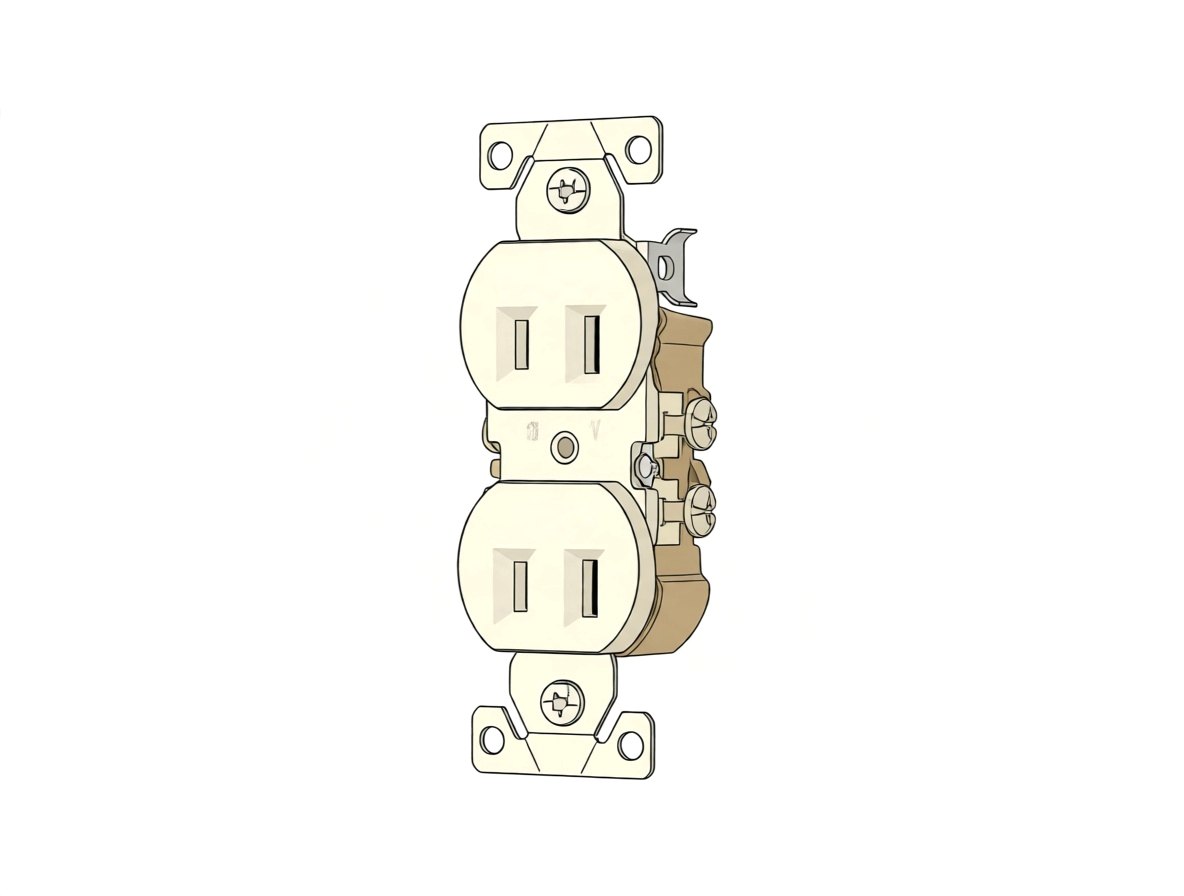
How it connects
Plug blades are pushed straight into the slots and held by spring contacts (friction); electrical contact via blade-to-contact pressure. No locking or sealing.
Male and female halves
Receptacle/outlet/connector body = female (R, this one); plug = male (1-15P) with two flat blades.
Usually connects to
- NEMA 1-15P polarized or non-polarized plug
- NEMA 5-15P does not fit the missing ground opening; removing its ground pin or using a cheater adapter is described as non-compliant
Common sizes
- One 15 A, 125 V configuration, with slots on 12.7 mm (1/2 in) centres.
- Polarized versions use about 7.9 mm neutral and 6.3–6.35 mm hot slots.
Where it is used
residential wiring (older)replacement outlets in ungrounded circuitsextension cords and cord connectorssmall appliancespower strips and timersconsumer appliances
Variations
- Polarized wide-neutral or older non-polarized equal slots
- Duplex wall body
- Inline cord connector
- JIS C 8303 Class II Japanese version, typically non-polarized
How to recognise it
Two parallel vertical rectangular slots, often one taller (neutral), no ground hole; marked 15A 125V, sometimes '1-15'. Often in duplex wall outlets or round cord connector bodies.
Often confused with
| Confused with | How to tell them apart |
|---|---|
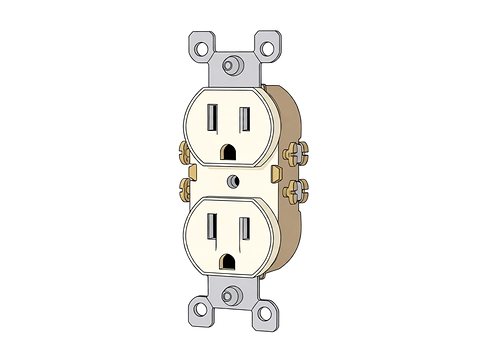
| NEMA 5-15R | 5-15R has a third round/D-shaped ground hole below the slots; 1-15R has only two slots. |
| NEMA 1-15P | 1-15P is the male plug with blades; 1-15R has slots. |
| NEMA 5-20R / 1-20R | 20 A versions have a T-shaped neutral slot. |
| NEMA 1-20R / 2-20R | 20 A versions have a T-shaped slot or tandem/horizontal blades; 1-15R has two parallel vertical slots. |
Also called
two-prong outlet2-slot polarized receptaclenon-grounding receptaclepolarized 2-slot outlet2-prong outletpolarized two-slot outlet
Good to know
New 125 V, 15/20 A receptacles must be grounding type under NEC. The 1-15R is mainly used as a replacement where no ground exists. Leviton 223-W is a polarized duplex example.
Related connections
Design with real parts
Crafti checks which parts connect, right in your browser.