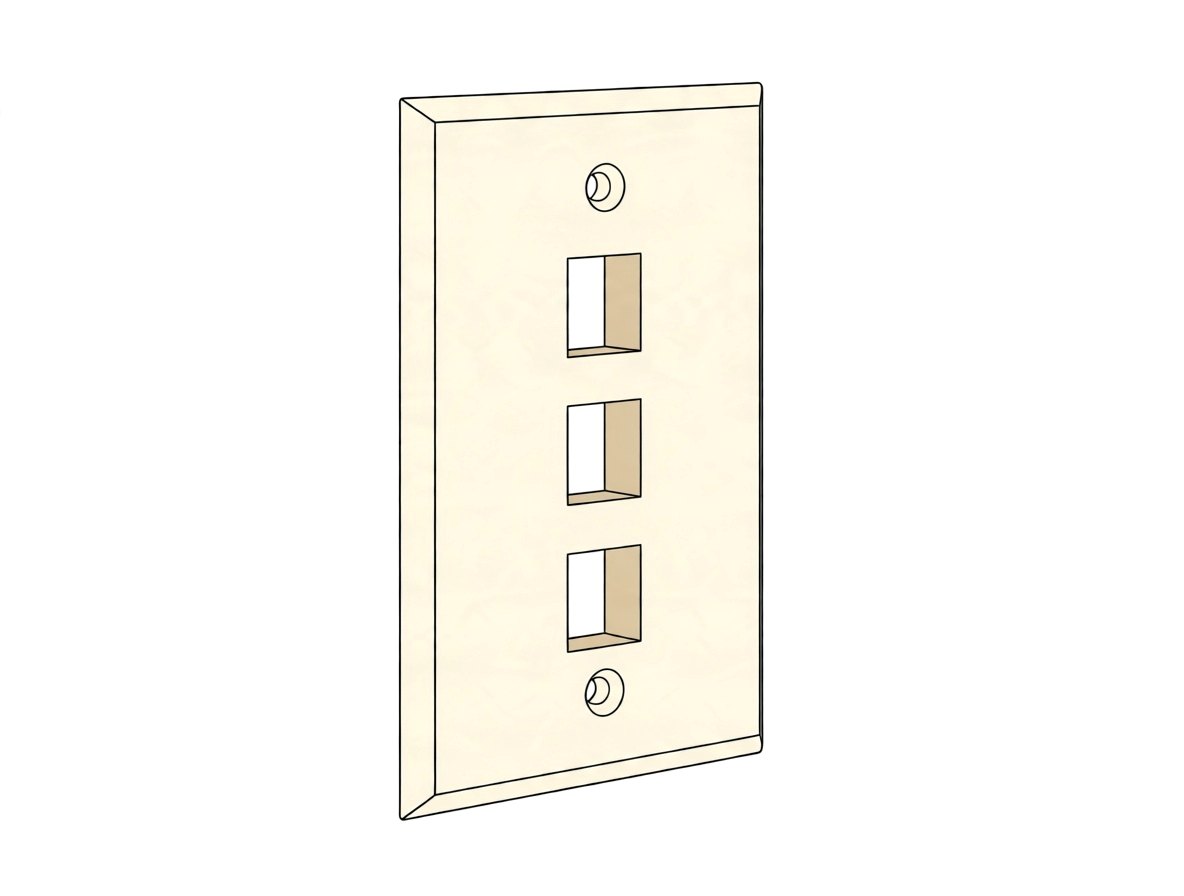
How it connects
You push the module through from the rear (or the front, on some plates). A flexible latch tab on the module clicks over the edge of the opening while a lip or hook on the other side holds the module in. To remove it, press the latch.
Male and female halves
The opening in the plate or panel is the receiving (female) half. The keystone module, with its latch, is the male half that snaps in.
Usually connects to
- Compatible snap-in keystone jack or coupler modules: RJ45 Cat5e/6, RJ11, F coax, HDMI, USB, RCA and banana
- Keystone blank inserts
Common sizes
- One de facto standard size, roughly 14.5 x 16 mm (about 0.58 x 0.65 in) at the face. Plates have 1 to 6 or more ports and patch panels 12 to 48. Exact dimensions vary slightly between makers.
Where it is used
Structured low-voltage communications cablingResidential data/computer wall outletsAudio/video and home-theater wall platesPatch panels
Variations
- flush wall plate opening
- angled/recessed opening
- unloaded keystone patch panel
- surface-mount box opening
How to recognise it
A plain rectangular hole about 15 x 16 mm, usually in a single-gang plate with 1 to 6 holes in a column or grid, or in a row of a patch panel. It has no contacts and one edge is shaped to catch the latch.
Often confused with
| Confused with | How to tell them apart |
|---|---|
| RJ45 jack / 8P8C socket | An RJ45 jack has contacts and the 8P8C socket shape. A keystone opening is a plain rectangular hole with no contacts. An RJ45 socket has an electrical plug opening and contacts. A keystone mounting receiver is the holder aperture surrounding a separate insert, which can even be a solid blank. An RJ45 socket has electrical contacts and accepts a modular cable plug. This empty plate opening receives the complete keystone module housing. |
| Decora/rocker strap opening | A Decora opening is a much larger rectangle (about 33 x 67 mm) sized for a full device. |
| Proprietary modular openings (Panduit Mini-Com, Leviton older types, Legrand) | These have different shapes and latch geometry, and keystone modules don't fit them. |
Also called
keystone holekeystone jack cutoutQuickPort-compatible openingKeystone module apertureKeystone snap-in mounting portKeystone mounting openingKeystone insert receiverKeystone jack wall-plate aperture
Good to know
This is a mechanical mounting interface. The signal connection depends on the inserted module. The keystone opening follows an industry convention; TIA/ISO cabling standards define the jacks rather than the opening.
Related connections
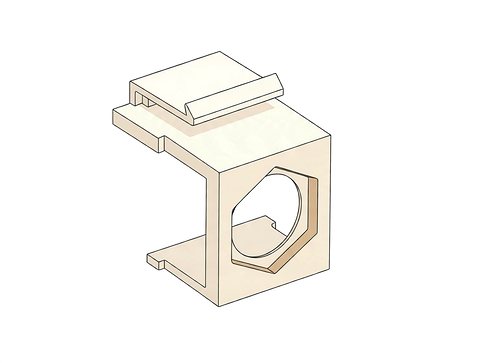 Keystone Module Mounting Tabs
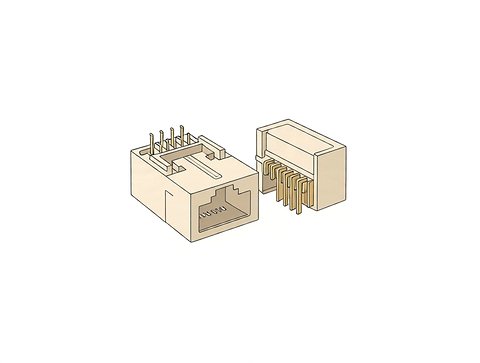 RJ45 / 8P8C Jack
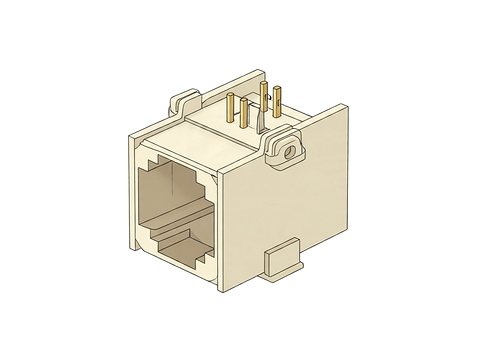 6-Position Telephone Jack
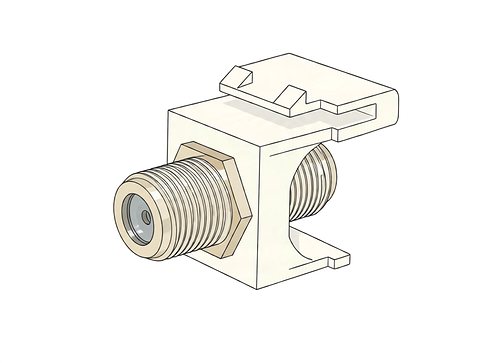 Female F-Type Coaxial Connector
Design with real parts
Crafti checks which parts connect, right in your browser.