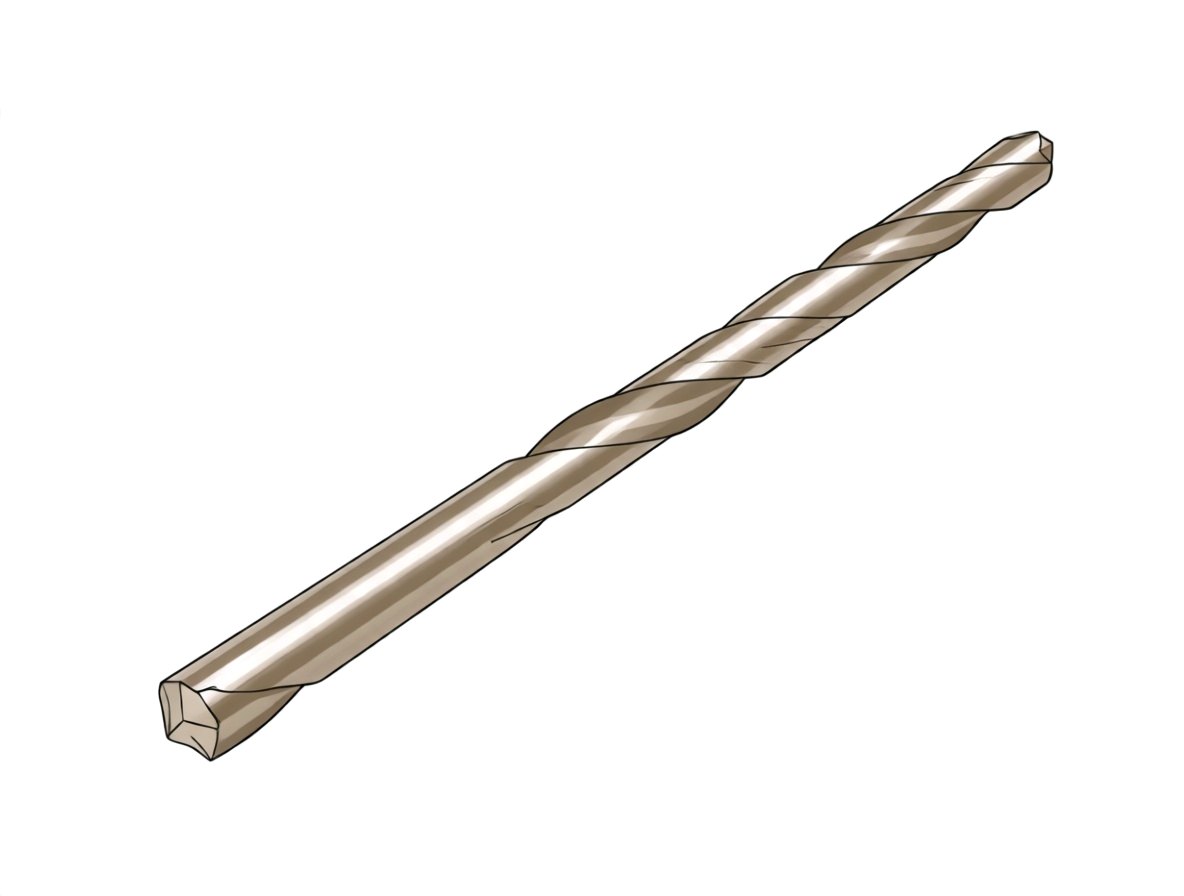
How it connects
Clamped concentric along its cylindrical body by three radially closing jaws (or a precision collet) using friction and mechanical clamping force.
Male and female halves
Male cylindrical shank that inserts into a female three-jaw drill chuck or collet receiver.
Usually connects to
- Matching-capacity keyed/keyless three-jaw drill or drill-press chuck
- Matching drill collet chuck
Common sizes
- Any round shank within the chuck capacity; typical chucks cover 0–10 mm (3/8 in), 0–13 mm (1/2 in) or up to 16 mm (5/8 in). Mini chucks cover about 0.3–3.4 mm.
- Common shanks: 3/16, 1/4, 5/16, 3/8 and 1/2 in or 6/8/10 mm; drill shanks also run from 1/16–1/2 in and under 1–13 mm, sometimes reduced to 3/8 in.
Where it is used
Hand/power drills and drill pressesConstruction, machining, metalworking and woodworkingDrill bits/hole cuttersPowered drain augers, brushes, mixers and other drill accessories
Variations
- Full-diameter straight round shank
- Reduced/Silver & Deming shank
- Extended-length shank
- Three ground flats/tri-flat for slip resistance
How to recognise it
Smooth, uniform cylindrical metal shaft extending from the cutting flutes or tool head without splines, grooves, flats, or taper.
Often confused with
| Confused with | How to tell them apart |
|---|---|
| 1/4-inch hex shank | Hex shanks feature a six-sided hexagonal cross-section often with a quick-release ball detent groove, whereas straight round shanks have a smooth round cylindrical cross-section. |
| Tri-flat drill shank | Tri-flat shanks have three machined flats 120 degrees apart to prevent slipping in 3-jaw chucks; straight round shanks are completely circular/smooth without flats. |
| Morse taper shank | Morse taper shanks have a conical tapered body that wedges into a matching tapered spindle socket, whereas straight shanks are constant diameter cylinders. |
| 1/4 in hex shank (quick-change) | Hex shank has six flats and often a groove for a quick-release holder; straight shank is round. |
| SDS / SDS-plus shank | SDS has open slots/grooves along the shank and locks in a hammer-drill holder; straight shank has no slots. |
Also called
straight shankcylindrical shankdrill chuck shankparallel shankplain round shank
Good to know
The most common and traditional shank style for standard twist drill bits and woodworking bits, compatible with standard 3-jaw chucks.
Related connections
Design with real parts
Crafti checks which parts connect, right in your browser.