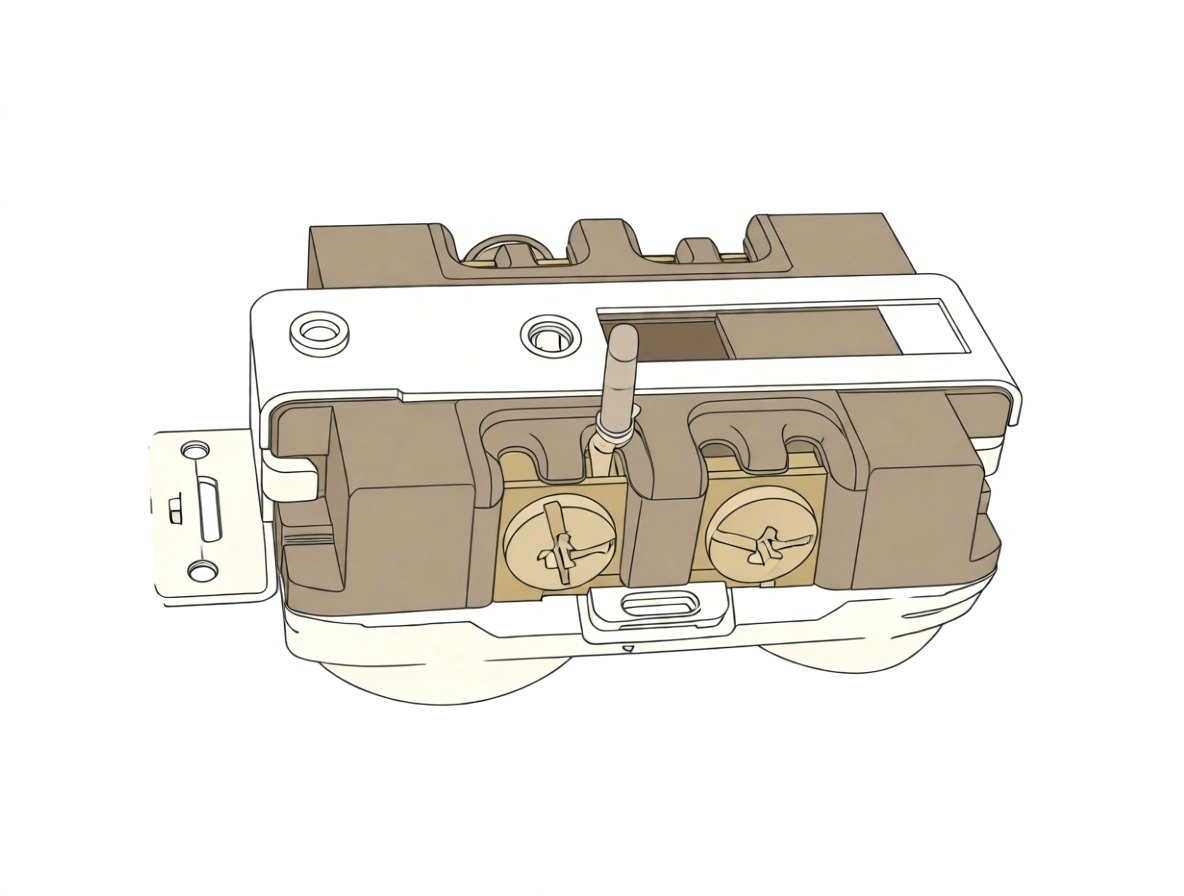
How it connects
Conductor is stripped and wrapped clockwise under the screw head (side-wire) or inserted under a clamp plate that the screw tightens (back-wire/pressure-plate); screw torqued to the device rating. No sealing; electrical contact only.
Male and female halves
Not gendered; it is a wire termination point on the device's mounting yoke, accepting a conductor rather than a mating connector.
Usually connects to
- Stripped solid or stranded building conductor, such as NM-B/THHN copper, of the material and gauge approved for the device; typical examples are 14–10 AWG on 15/20 A devices
- Bare or green-insulated copper grounding conductor within that rating
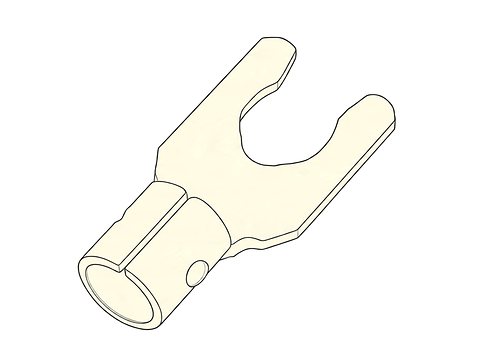
- Grounding pigtail with a loop or fork terminal
Common sizes
- Check the approved conductor range for the specific device. Typical 15/20 A terminals take 14–10 AWG copper, sometimes one or two wires per plate, using #8-32 or #10-32 screws.
- Industrial pressure-plate blocks span roughly 22–8 AWG and larger.
- One Leviton duplex example permits copper or copper-clad wire up to #10 AWG; current rating alone does not establish wire capacity or screw thread.
Where it is used
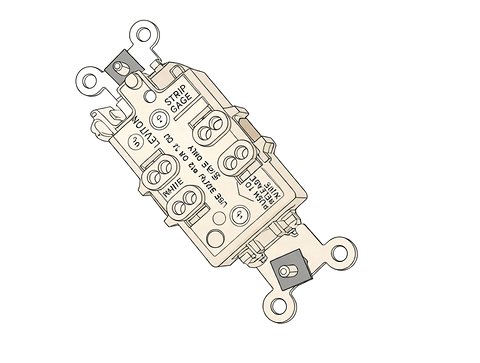
Residential/commercial building wiring devicesReceptacles, including duplex/GFCI/AFCI and GFCI line/load terminalsWall switchesElectrical boxes/enclosuresTerminal blocks
Variations
- Side binding screw with conductor looped clockwise
- Back-wire pressure plate clamping straight wire
- Combined back/side-wire
- Green box-grounding screw, 8-32 or 10-32
- Self-grounding yoke clip
- Silver/nickel neutral, brass hot and green ground screws
How to recognise it
Green hex or slotted/Phillips combination screw head, usually at the bottom corner of a receptacle or switch, mounted on or bonded to the metal mounting strap (yoke), sometimes marked GR or GND.
Often confused with
| Confused with | How to tell them apart |
|---|---|
| line/neutral terminal screws (brass/silver) | Ground terminal is green and attached to the metal yoke; hot is brass, neutral is silver. |
| box grounding screw | Box ground screws thread into a tapped hole in the metal box, not part of the device; same green color and 10-32 thread are common. |
| Push-in / backstab spring terminal | A screw-operated back-wire terminal requires screw tightening to retain the wire. A spring push-in terminal grips on insertion; rear wire entry alone does not distinguish them. A spring contact retains an inserted wire without tightening a clamping screw. |
| NEMA 5-15R receptacle interface | NEMA 5-15R describes the front plug-contact pattern. This item describes the building-wire terminals at the side or rear. |
| Side-wire binding screw | The conductor forms a hook around the screw; in a pressure-plate clamp the wire slides straight under a clamp. |
Also called
green ground screwgrounding terminalground terminal screwgreen hex-head grounding screwback-wire ground clamp; external back-wire clampback-wire clamp terminal; screw-clamp wire terminalpressure-plate wire terminal; pressure-plate screw terminalside-wire terminal
Good to know
This screw terminates an equipment grounding conductor. A loose 10-32 box-grounding screw is another implementation of the same clamping method. Additional standard references: IEC 60998.
Related connections
Design with real parts
Crafti checks which parts connect, right in your browser.