How it connects
The bulb's male screw base threads into the socket shell; electrical contact is made via the threaded shell (neutral) and the spring/tab centre contact touching the bulb's foot contact (line). No sealing.
Male and female halves
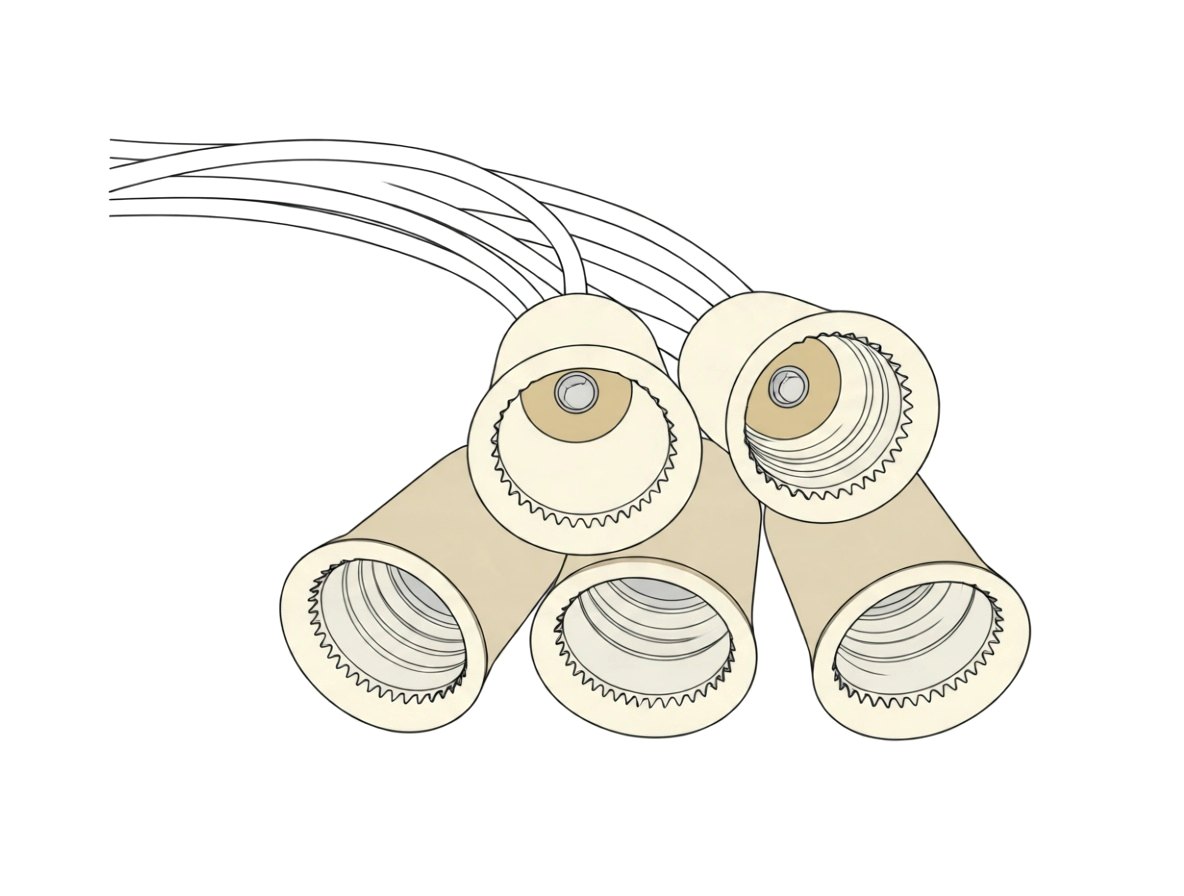
The socket or lampholder is the female half (internal thread); the bulb's screw base is the male half. This port is the female socket.
Usually connects to
- E12 candelabra screw-base bulbs (e.g. B10, C7, CA10, F15 candle lamps)
Common sizes
- Single size: E12, about 12 mm thread diameter. Related Edison sizes are E10 (miniature), E14 (European candle/SES), E17 (intermediate) and E26/E27 (medium/standard).
Where it is used
chandelierscandelabra and candle-style fixturesoutdoor lanternsnight lightsdecorative lighting
Variations
- phenolic or porcelain body
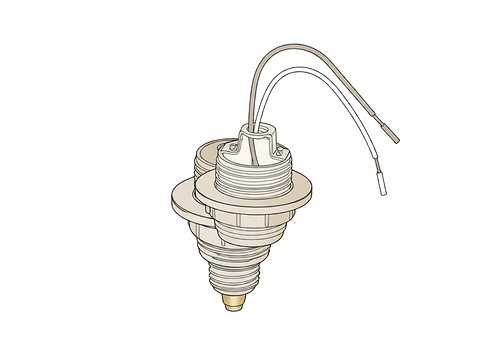
- full-thread outer shell with ring (for shade/fixture mounting)
- snap-in or bracket-mount
- socket with wire leads
How to recognise it
A small cylindrical holder (bore about 12 mm) with a brass or nickel threaded shell inside and a single centre contact at the bottom. It is often labelled 'E12', '75W 125V' or 'candelabra', and is usually found inside candle-sleeve covers on chandeliers and lanterns.
Often confused with
| Confused with | How to tell them apart |
|---|---|
| E14 (European small Edison screw) | E14 is 14 mm and used in Europe/UK; an E12 bulb is loose in an E14 socket and E14 will not enter E12. |
| E26/E27 medium base | Much larger, about 26-27 mm diameter. |
| E10 miniature screw | Smaller, about 10 mm, mostly for flashlights and indicator lamps. |
Also called
candelabra socketcandelabra base lampholderE12 lamp holderE12 bulb socket
Good to know
Size distinguishes Edison-screw sockets within the family, including E10, E12, E14, E17, E26 and E27.
Related connections
Design with real parts
Crafti checks which parts connect, right in your browser.