How it connects
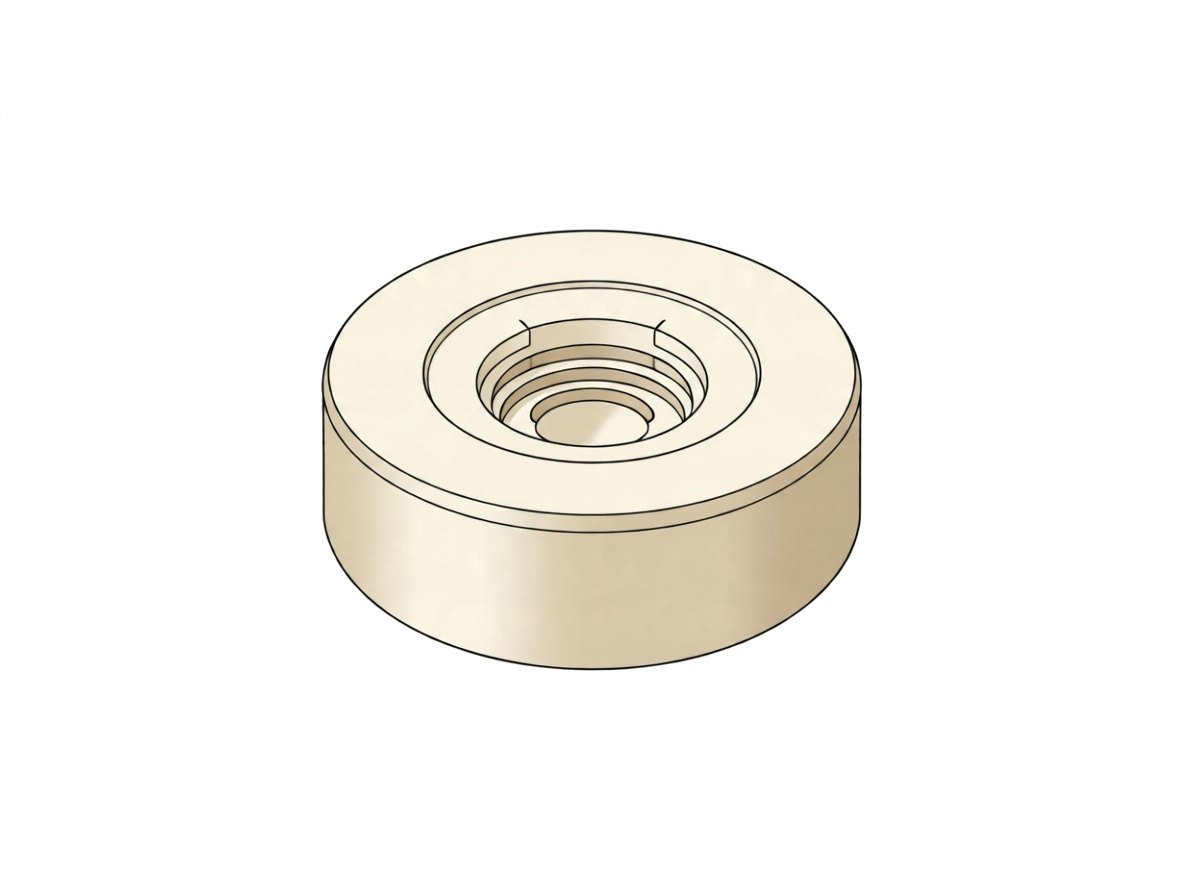
The stud's headed post is pushed into the socket, where a spring (wire spring, ring spring or slotted lip) grips it; pulled apart by hand. Not sealing. Each half is attached to material by a cap/post rivet or prongs.
Male and female halves
Socket = female (receives); stud = male (has the post). This connection is the female socket, usually paired with a cap on the outside face.
Usually connects to
- male snap stud of the same size/style
Common sizes
- Common sizes about 8-15 mm cap diameter (e.g. size 15 ≈ 3/8 in / 10 mm, size 24 ≈ 15 mm); larger decorative caps up to ~20-25 mm. Stud post diameter is not standardized across brands.
Where it is used
clothingleathercraft and bagsmarine canvasstraps and organizersESD grounding snaps
Variations
- ring spring (S-spring) snaps
- wire spring / line 20/24 snaps
- open/closed prong (no-sew) snaps
- plastic resin snaps
- ESD 10 mm snaps
How to recognise it
Round metal or plastic disc with a central hole/recess, often a visible spring or slotted lip inside; mounted on the inner flap, opposite a part showing a protruding stud.
Often confused with
| Confused with | How to tell them apart |
|---|---|
| male snap stud | The stud has a protruding headed post; the socket has a hole/recess. |
| grommet / eyelet | A grommet is a plain through-ring with no spring grip and no mating stud. |
| sew-on snap | Sew-on snaps are flat discs with stitching holes, not riveted; similar mating principle. |
Also called
popper socketsnap fastener socketpress-stud femalering spring socket
Good to know
Fit between brands/sizes is not interchangeable in general; studs and sockets must match series and size. The sample part's dimensions (22 mm OD, 6 mm hole) were estimates.
Design with real parts
Crafti checks which parts connect, right in your browser.