How it connects
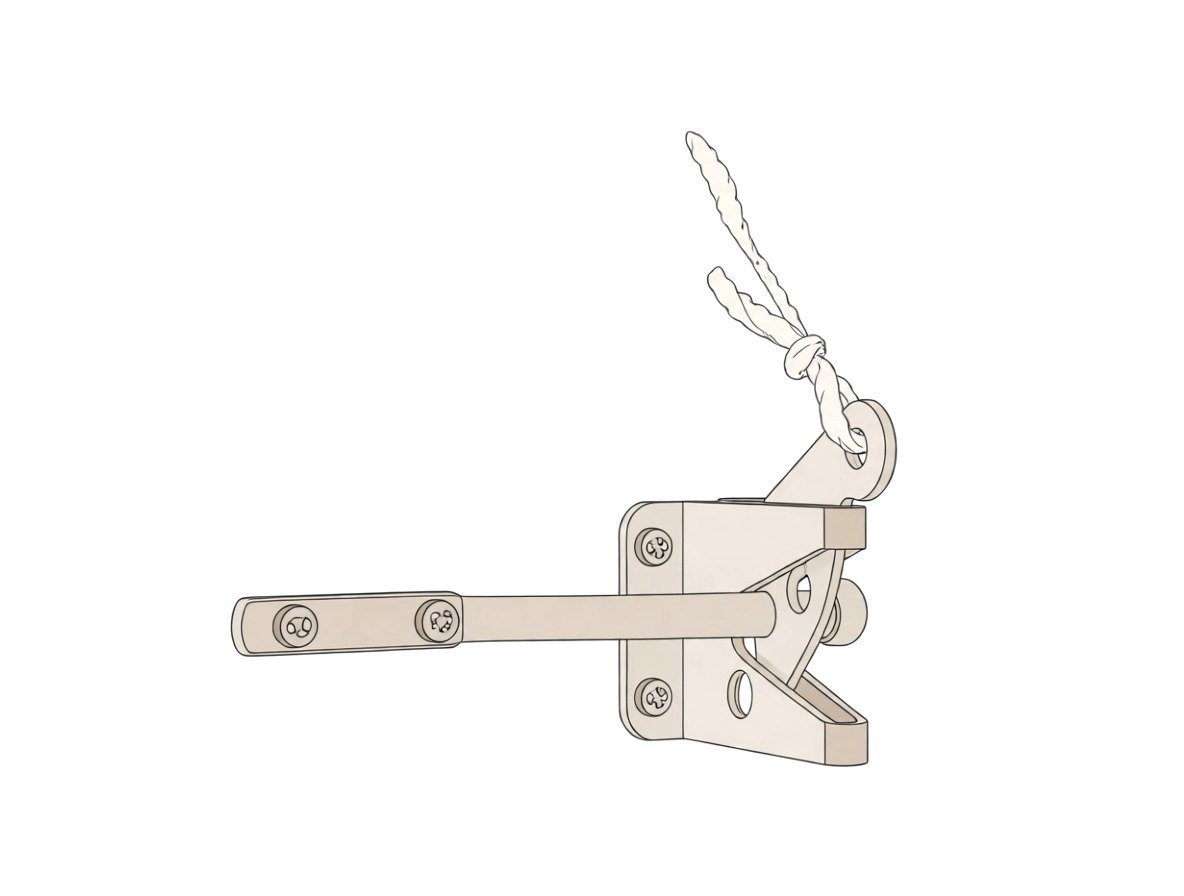
Mechanical engagement where an oncoming striker rod deflects a pivoted weighted flipper/lever upward; gravity drops the lever behind the rod into a locking pocket.
Male and female halves
Female catch/receiver assembly mounted to the gate post; mates with a male cylindrical striker bar mounted to the swinging gate.
Usually connects to
- gravity latch striker bar
- floating striker rod
- gate latch striker pin
Common sizes
- Typically sized to accept cylindrical striker bars of 3/8 in (9.5 mm) to 1/2 in (12.7 mm) diameter; bracket heights typically 2 in to 3 in.
Where it is used
residential fencinggarden gatesdeck gatespasture gates
Variations
- straight catch
- offset catch
- heavy-duty commercial catch
- lockable/padlockable catch
- floating bar receiver
How to recognise it
Look for a U- or V-shaped mounting bracket fitted with a vertical pivoting lever that swings freely upward and falls back under its own weight, designed to cradle a cylindrical horizontal rod.
Often confused with
| Confused with | How to tell them apart |
|---|---|
| Suffolk latch keeper | A Suffolk latch keeper receives a flat bar pivoted across the door face, whereas a gravity latch catch uses a pivoting gravity dog/flipper that captures a protruding round rod. |
| Spring-loaded slam latch | Spring slam latches utilize coil or leaf springs for return action, while gravity catches rely strictly on a weighted pivoting pawl/lever. |
Also called
gravity latch receivergate latch catchgravity gate keeperautomatic gate latch keep
Good to know
Often sold as a kit comprising the strike bar and the catch assembly. Dimensions vary slightly between manufacturers (typically 3/8 in or 1/2 in bar clearance), so catches and striker bars are rarely standardized across brands.
Related connections
Design with real parts
Crafti checks which parts connect, right in your browser.