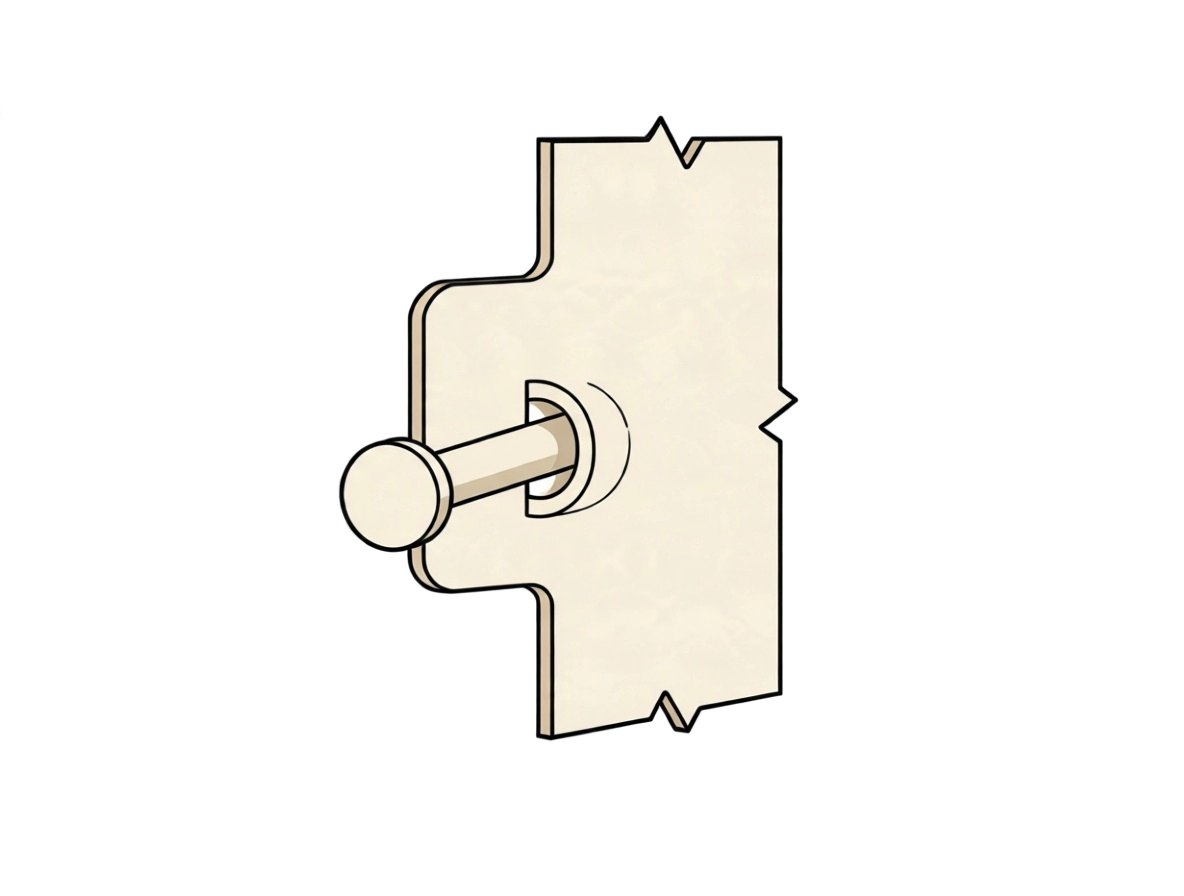
How it connects
Guides a fastener at an oblique 45-degree angle through the connector cheek, passing through the supported member and penetrating into the header to distribute load across two shear planes.
Male and female halves
Female formed guide aperture that receives a male shank fastener (nail or structural screw).
Usually connects to
- Manufacturer-specified hanger nail, common/connector type, collated or hand-driven; examples include 10d/16d × 1-1/2 or 2-1/2 in
- Approved Simpson Strong-Drive SD connector screw for the particular hanger, including I-joist bottom-flange applications
- Wood joist and header receiving the angled fastener
Common sizes
- Match the hanger-specified nail or screw: 10d/0.148 in (3.76 mm), 16d/0.162 in (4.11 mm), or #9/#10 connector screws.
- Formed guide openings are listed around 3.8–5.0 mm or 4–9 mm, with 0.148–0.162 in holes on some 12–18 gauge steel.
- LUS examples guide the specified 10d nail at about 45°.
Where it is used
Residential/light-commercial wood framingCommercial timber framingDeck/floor/roof framing, including engineered joistsFace-mount joist/beam hangers
Variations
- Lanced/punched/bent tab guide
- Slant/Positive-Angle Nailing (PAN) guide
- Double-shear guide
- Raised/embossed dome hole
How to recognise it
Recognized on joist hanger cheeks as a hooded, semi-circular stamped dome or punched tab oriented diagonally at roughly 45 degrees relative to the joist and header surfaces.
Often confused with
| Confused with | How to tell them apart |
|---|---|
| standard round fastener clearance hole | Standard round clearance holes are punched perpendicular (90 degrees) to the sheet face for straight nailing into headers, whereas double-shear guides have a raised dome or lanced tab angled at 45 degrees. |
| speed prong / triangle locator tab | Speed prongs are pointed, inward-facing stamped barbs used to temporarily hold the connector against the wood before fastening, rather than hooded through-holes for screws or nails. |
| double-shear nailing guide | Double-shear guides direct fasteners through both the joist and header at a compound 45-degree angle; PAN guides direct fasteners specifically into the bottom flange of the carried joist. |
| standard round nail hole | Standard round holes drive fasteners perpendicular to the metal surface without a punched directional guide tab. |
| Straight-nailing hanger hole | Double-shear guides direct joist fasteners obliquely into both joist and header; straight joist nails do not reach the header. |
Also called
slant nailing guidedouble-shear nail hole; Double-shear nailing hole; Dome nailing hole; dome nail holeoblique fastener guidePAN guidepositive angle nail holeslotted nail guidejoist hanger lanced nail tabTab nailing hole
Good to know
Introduced commercially by Simpson Strong-Tie on joist hangers (e.g. HUS, LUS, LRU series) under patents for double-shear / slant nailing. While the fastener acts in double shear across two shear planes (header-to-hanger and hanger-to-joist), the port itself is the female formed guide hole on the connector. Additional standard references: ASTM D1761; ASTM D7147.
Related connections
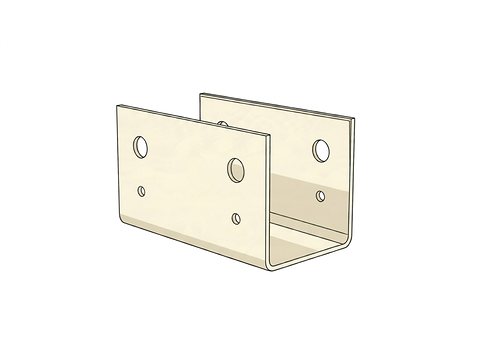 Dimensional Lumber Joist and Beam Hanger Seat
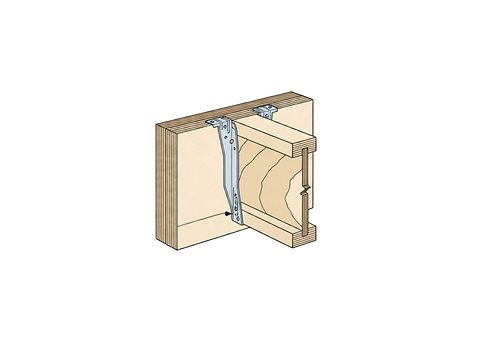 Engineered Wood I-Joist Hanger Seat
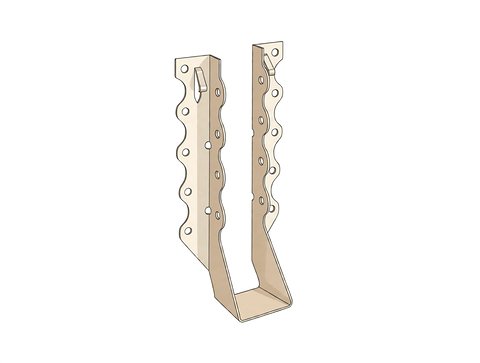 Stamped Wood-Engagement Prong
Design with real parts
Crafti checks which parts connect, right in your browser.