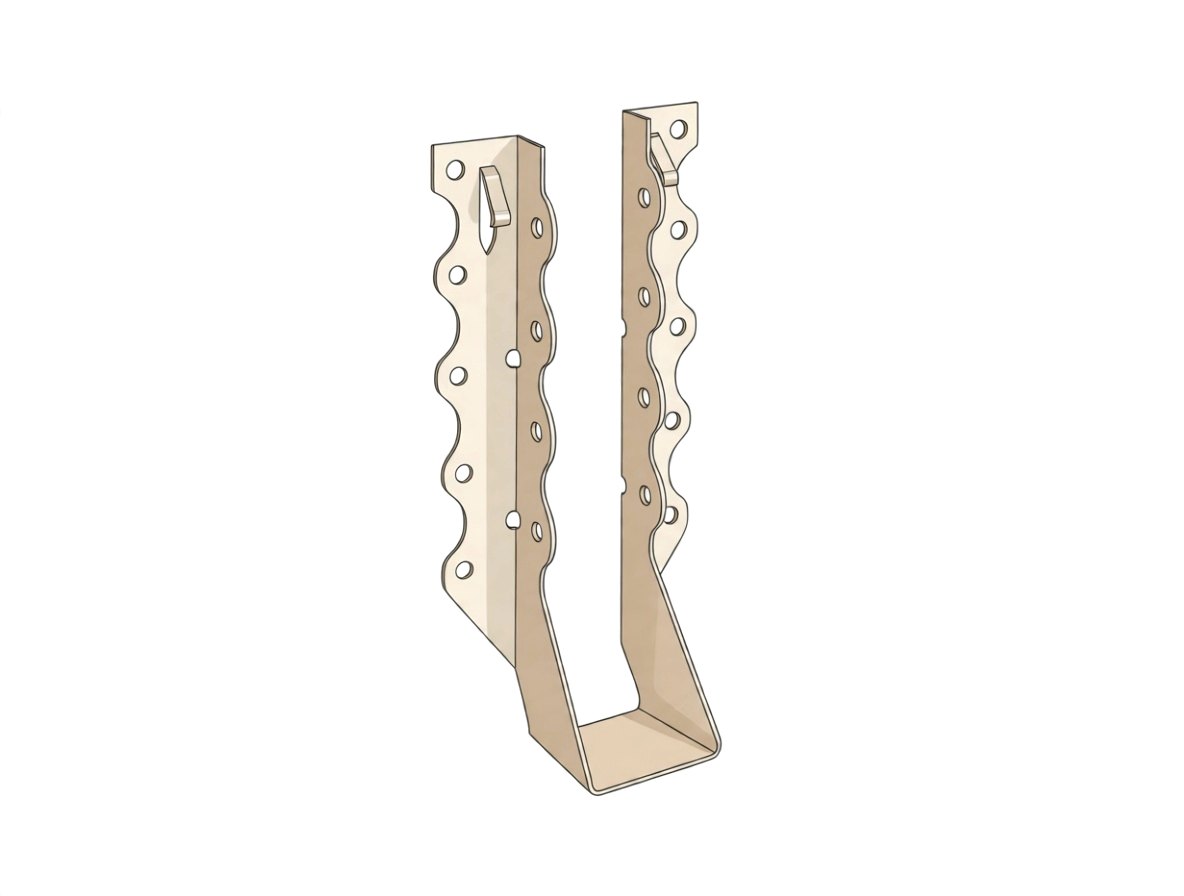
How it connects
Driven directly into the wood grain by a hammer strike on the bent metal tab, creating a temporary frictional holding interface before permanent nails or screws are driven.
Male and female halves
Male stamped pointed tab on the metal connector that embeds into the unmachined face of female timber framing.
Usually connects to
- Solid-sawn wood framing face, such as a stud, joist, header, timber or truss chord
- Compatible engineered-wood framing member
Common sizes
- Prongs can be about 15–20 mm long and 5–8 mm wide, with 4–10 mm projection; listed penetration ranges include 6–8 mm (1/4–5/16 in).
- Sheet ranges include 14–20 gauge (about 1.2–2.0 mm for the heavier examples). Struts may span 2 × 8–2 × 16 joists at 12–24 in centres.
- Simpson MP plates are 20-gauge galvanized, in 1 × 4, 2 × 4 and 3 × 6 in sizes, among others; MP36 is 3 × 6 in.
Where it is used
deck buildinglight commercial timber framingresidential light-frame constructionfloor joist cross-bridgingelectrical and plumbing protection; residential electrical rough-inlight carpentry repairnon-structural wood splicesDIY
Variations
- pointed single prong; Dual corner prongs
- barbed tab
- triangular lanced barb
- bent-flange prongs (top/angled end); in-line edge prongs (bottom end)
- Multi-tooth truss connector plate; structural metal-plate-connected truss plates
- MP14
- MP24
- MP36
How to recognise it
Look for a triangular or pointed metal tab cut (lanced) directly out of the face flange of a sheet metal joist hanger and bent backward/forward to protrude toward the wood.
Often confused with
| Confused with | How to tell them apart |
|---|---|
| truss connector plate teeth (gang-nail) | Truss plates feature high-density arrays of teeth machine-pressed into butt joints for permanent load transfer, rather than isolated manual positioning tabs on hangers. Truss plates feature a dense grid of punch-pressed teeth rolled or pressed across a flat timber splice plate, whereas bridging prongs are 2 to 3 discrete stamped prongs on strut ends driven manually with a hammer. |
| toe-nailed or face-nailed bridging flanges | Standard tension bridging (e.g. TB series) uses round nail holes requiring separate 8d/10d nails, whereas nailless bridging features integral sharp triangular teeth. |
| Separate common/drywall nail or screw | Integral prongs are stamped directly out of the metal plate body and bent 90 degrees rather than driven through a clearance hole. |
| Truss plate (MPC) | Engineered truss plates are pressed in by a factory press and are structural. Simpson marks the MP 'not for trusses'. |
| Nailed mending plate / flat strap tie | That kind has round nail holes and no stamped teeth. |
Also called
Speed Prong; stud plate prongpositioning prong; locator prongtemporary holding prongintegral positioning tabnailless bridging prongs; stamped prongs; barb prongsself-nailing prong; integral pointed prongwood-piercing spurtruss plate tooth
Good to know
Commonly known under the Simpson Strong-Tie trademark 'Speed Prongs'. They do not contribute to the structural load rating of the installed connector; their sole purpose is temporary hands-free positioning.
Related connections
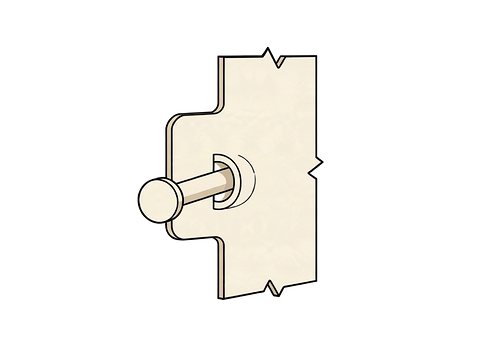 Angled Structural Connector Fastener Guide
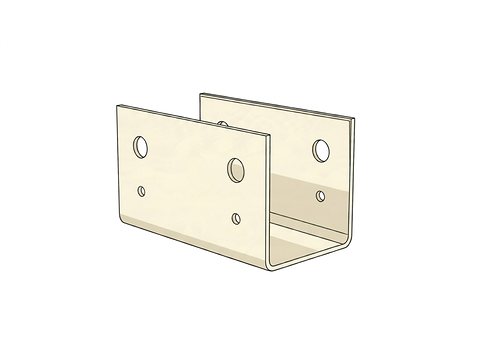 Dimensional Lumber Joist and Beam Hanger Seat
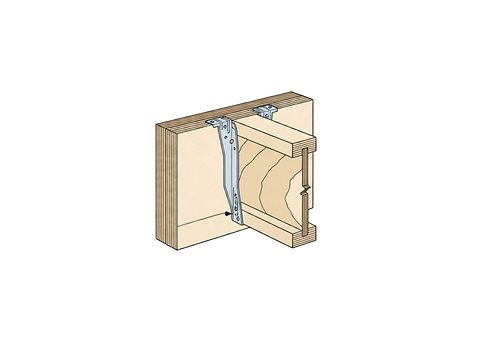 Engineered Wood I-Joist Hanger Seat
Design with real parts
Crafti checks which parts connect, right in your browser.