How it connects
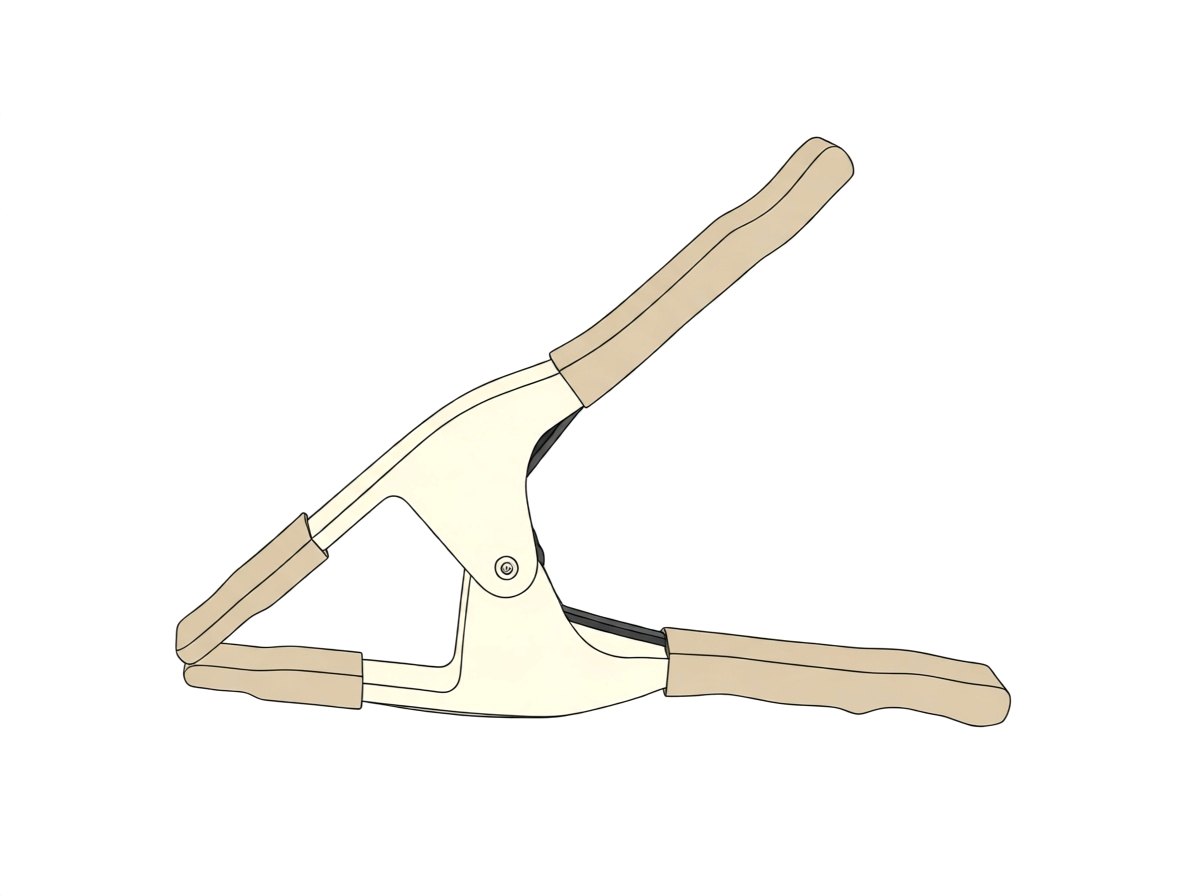
Opposing jaws are forced together by a central torsional spring, exerting inward compressive clamping pressure and friction onto an interposed workpiece.
Male and female halves
Genderless opposing pair of jaws that clamp externally onto a workpiece.
Usually connects to
- workpieces
- sheet materials
- pipes
- backdrops
- tarps
- wood pieces
Common sizes
- Typically rated by maximum jaw opening capacity, commonly 1/2 in to 3 in (12 mm to 76 mm), with throat depths up to 3 in (76 mm).
Where it is used
woodworkingcarpentryphotography studio riggingcraftstemporary holding and fixturing
Variations
- vinyl/rubber dip-coated jaws
- pivoting polymer jaw pads
- serrated metal jaws
- v-grooved jaws
How to recognise it
Pair of opposing lever tips extending from a pivot pin containing a heavy-duty coil spring, often tipped with vinyl coating or pivoting plastic pads.
Often confused with
| Confused with | How to tell them apart |
|---|---|
| C-clamp jaws | C-clamp jaws use a threaded screw mechanism for high clamping force rather than spring-loaded pivot action. |
| Locking plier jaws | Locking pliers use an over-center toggle mechanism that locks in place rather than simple continuous spring tension. |
Also called
spring clamp jawspinch clamp jawsspring clamp padsspring clamp tips
Good to know
Described as a connector port on temporary holding tools (such as spring clamps) to define the mechanical gripping interface holding target objects.
Related connections
Design with real parts
Crafti checks which parts connect, right in your browser.