How it connects
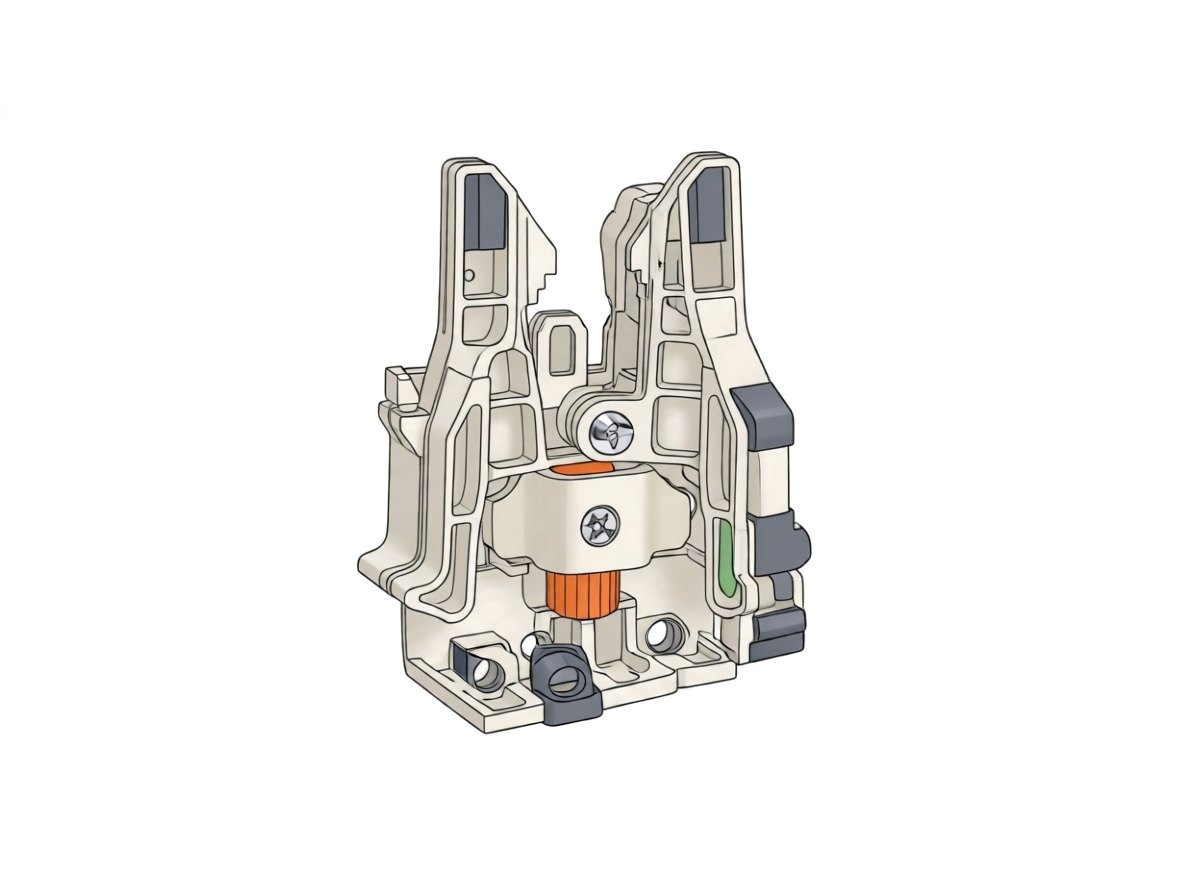
The slide rail slides along the underside of the drawer and clicks into a spring-loaded catch on the underside-mounted locking device. Squeezing release triggers disengages the catch to allow drawer removal.
Male and female halves
Genderless or interlocking pair: the metal slide rail tip with a stamped engagement notch/catch mates into the plastic or zinc locking device housing mounted beneath the drawer front.
Usually connects to
- Matching concealed undermount runner front extension/tip
- Corresponding drawer-front locking/release clip/device
Common sizes
- Brand-specific undermount fit, commonly for 1/2–5/8 in (12.7–16 mm) drawer sides/sub-fronts and 9–30 in (229–762 mm) runners.
- Other descriptions give 15–21 mm slide widths and 5/8–3/4 in drawer stock; confirm the matching slide profile.
Where it is used
Residential furniture/cabinetryCommercial caseworkKitchen/bath vanitiesFurniture manufacturing
Variations
- narrow drawer locking device
- heavy-duty zinc locking device
- standard 1D (height adjustment only); 2D (height and side adjustment); 3D (height, side, and depth adjustment)
- standard manual release latch
- multi-axis adjustable locking device (2-way, 4-way, 6-way adjustment)
- Blum TANDEM / MOVENTO locking catch profile
- DTC undermount slide latch profile
- Grass Dynapro / Dynamoov catch interface
How to recognise it
Recognized by a molded plastic or cast zinc clip screwed to the bottom corner beneath the drawer box front, featuring spring-loaded orange, green, or grey release levers and fine-adjustment thumbscrews.
Often confused with
| Confused with | How to tell them apart |
|---|---|
| side-mount drawer slide disconnect lever | Side-mount slides use a flexible plastic disconnect trigger lever on the slide rail itself, whereas undermount slides use separate front locking devices mounted beneath the drawer floor. |
| Rear undermount drawer slide mounting bracket | Rear mounting sockets support the cabinet side of the slide rail at the rear of face-frame cabinets, whereas locking clips attach the drawer box itself to the runner at the front. Rear brackets mount to the cabinet back panel to support the fixed slide track, whereas front locking clips mount to the underside of the drawer box to secure and adjust the movable drawer. |
| Lock-in / lock-out heavy duty drawer slide mechanism | Lock-in/lock-out mechanisms prevent drawer travel when fully open or shut; front locking devices connect and detach the removable drawer box from concealed undermount runners. |
| Rear undermount drawer slide hook/pin | The rear hook/pin penetrates a pre-drilled hole in the back of the wooden drawer box, whereas the front engagement latches into a screwed-on clip at the front bottom corner. The rear hook is a static upturned pin engaging a pre-drilled hole in the drawer back panel, whereas the front latch is a spring-catch snap-fit interface. |
Also called
undermount drawer slide locking device engagement; undermount slide locking device catchundermount slide release clip connectiondrawer slide front locking latch; drawer slide locking clip engagement tab; drawer slide latch engagement tabundermount runner locking bracket; undermount front locking bracket; undermount runner front clip catchfront locking device latchdrawer fixing clip catchundermount drawer slide runner tipundermount runner front latch pin/prong
Good to know
The term describes the interlocking interface between an undermount concealed drawer runner and its front locking clip. While manufacturers (e.g., Blum Tandem/Movento, Salice Futura, DTC, Grass Dynapro) use brand-specific catch geometry, the functional interface is universal across concealed undermount drawer systems.
Related connections
Design with real parts
Crafti checks which parts connect, right in your browser.