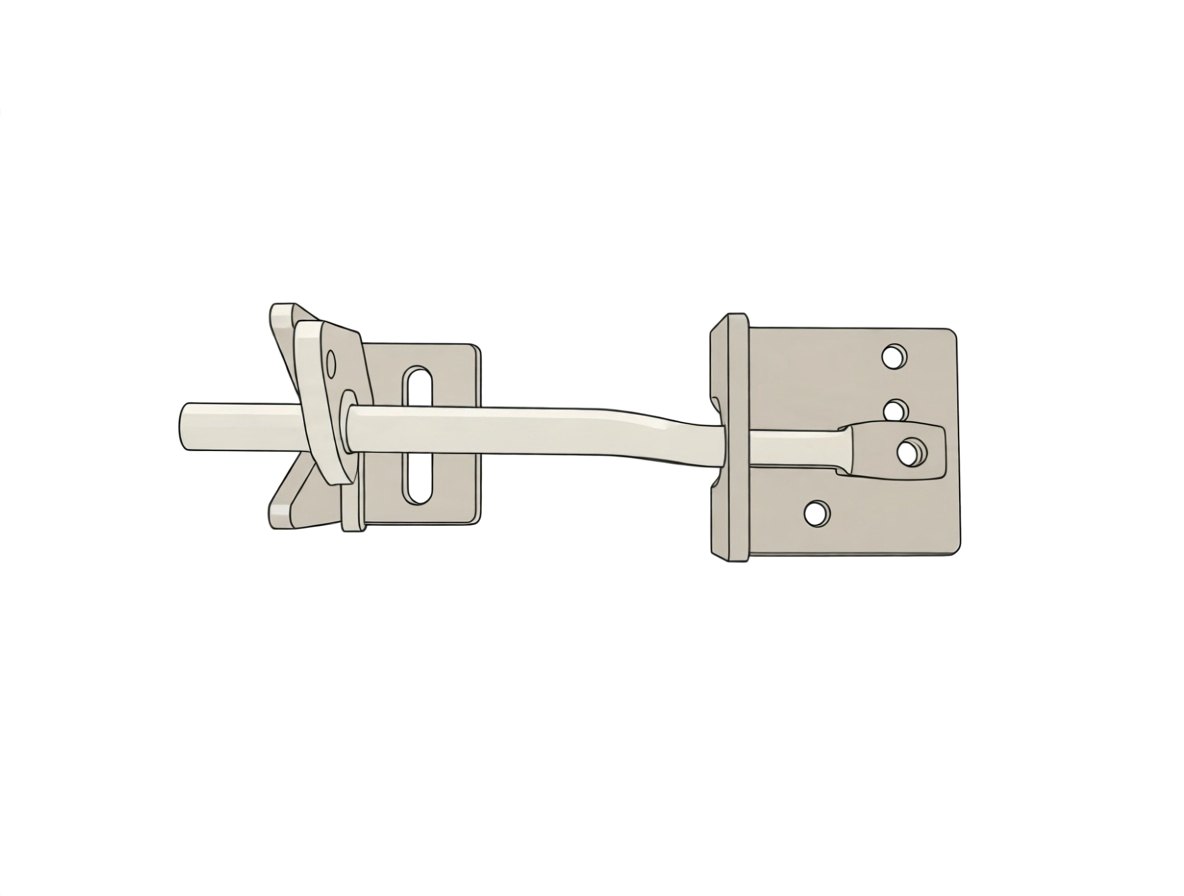
How it connects
The strike bar mounted on the gate swings into the catch assembly mounted on the post, deflecting a gravity- or spring-operated pivot arm that drops or snaps over the bar to capture and retain it.
Male and female halves
Genderless or complementary mating pair: the male member is the strike bar/pin; the female member is the catch/receiver bracket with a pivoting latch arm.
Usually connects to
- Matching gate latch catch/keeper bracket
- Fence/gate post or opposing gate leaf/frame supporting the assembly
- Matching striker bar within the latch assembly
Common sizes
- Strike bars commonly 3/8–1/2 in (9.5–12.7 mm), with some bolt/pin latches 1/2–1 in.
- Latch/plate lengths commonly 2–8 in (4–8 in or 100–200 mm for some bars); post-to-gate gaps about 0.25–2.5 in.
- Gate-frame mounts may fit 1-1/2–2-1/2 in posts, fence mounts 2–6 in square/round posts, or 1-3/8–4 in round posts depending on hardware.
Where it is used
residential fencingagricultural gatesdeck and pool gates; pool safety gatescommercial fence installationsvinyl picket gatesgarden gates; trailer gatesagricultural fencing; pool fencingcommercial security gates
Variations
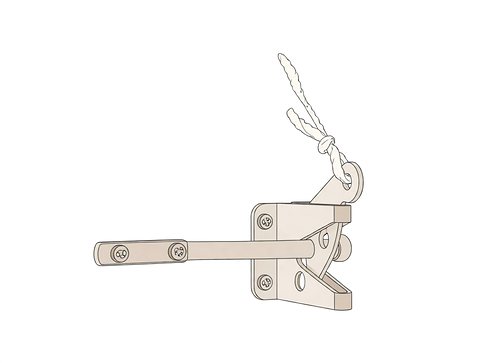
- Gravity/fork/flip latch
- Thumb latch with drop bar
- Spring-loaded slide bolt with keeper
- Magnetic safety/pull latch with keeper
How to recognise it
Recognized by a cylindrical or rectangular strike arm projecting from the gate face or edge, mating with an open-mouthed bracket containing a pivoting gravity dog or spring cam mounted on the opposing post.
Often confused with
| Confused with | How to tell them apart |
|---|---|
| Door latch and strike plate | Door strike plates receive a spring-loaded beveled bolt inside a recessed mortise/jamb, whereas gate latches use surface-mounted open jaws or pivoting gravity arms that capture an external bar. |
| Gate hinge | Gate hinges provide the rotational pivot axis on the hanging side of the gate, whereas the latch and catch secure the swinging edge opposite the hinges. |
| Drop rod / cane bolt | A drop rod anchors the gate into a ground hole or sleeve rather than latching against a vertical fence post. A cane bolt anchors vertically into the ground or pavement rather than latching horizontally into a post-mounted keeper bracket. |
| Mortise gate lock | A mortise lock is recessed inside a pocket cutout in the gate profile, whereas a surface-mounted latch mounts entirely externally on the face of the post and gate. |
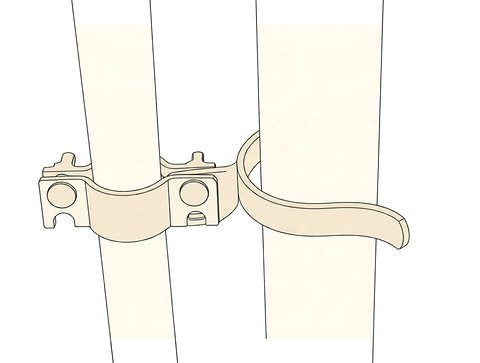
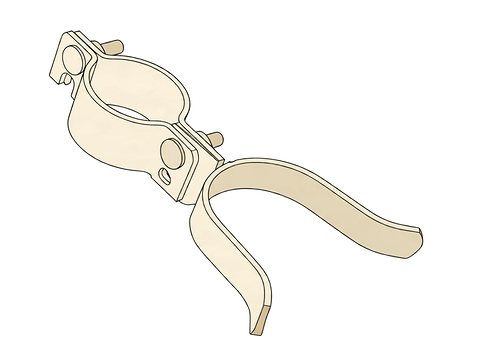
| Chain link gate fork latch | Chain link fork latches clamp around round tubular pipe posts rather than fastening flat against a planar surface. |
Also called
Gate latch and striker; gate striker and catchGate gravity latch; Gate latch and keeperSelf-closing gate latchpost catchauto gate latch; Gate latch and strikeGate latch and catch; Gate latch receiversurface mount gate latchslide bolt latch and keeper
Good to know
Gate latch and catch assemblies are surface-fastened hardware sets rather than standardized dimensional connectors; mounting hole patterns and clearances vary by manufacturer.
Related connections
Design with real parts
Crafti checks which parts connect, right in your browser.