How it connects
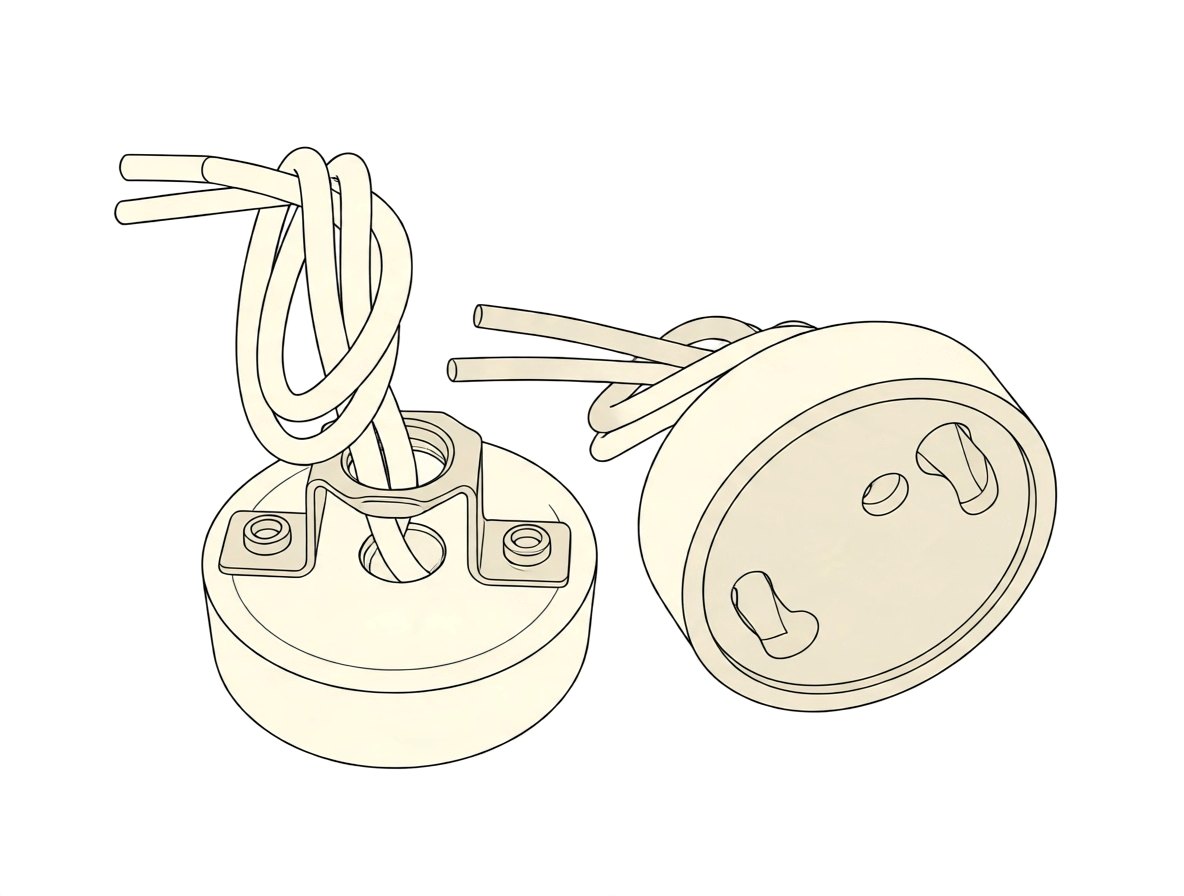
Lamp pins are pushed into the two keyhole slots and the lamp is rotated about a quarter turn so the pin heads lock behind the slot edges and seat on spring contacts; no seal.
Male and female halves
Socket/lampholder is the female half (two curved keyhole slots); the lamp base with two pins is male. This connection is the female socket.
Usually connects to
- GU24 base lamps (LED, CFL with integral ballast)
- E26-to-GU24 adapters
Common sizes
- Single size: 24 mm pin centre spacing; holder bodies typically about 35-40 mm diameter.
Where it is used
residential lightingrecessed downlightsbath fan lightsenergy-code compliant fixtures
Variations
- with mounting bracket/hickey
- snap-in clip mount
- screw mount
- integrated with ballast/driver
- E26 to GU24 adapter
How to recognise it
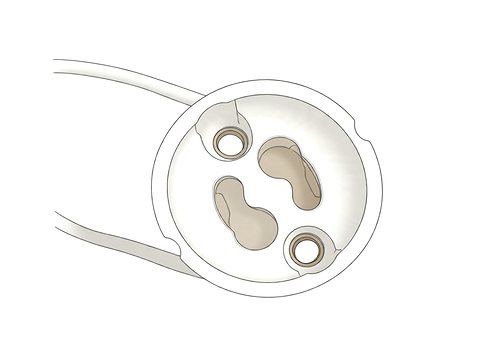
Round, usually white or ivory plastic disc with two opposed curved keyhole slots (wide end for pin heads) 24 mm apart, often a small centre hole, marked 'GU24' or 'lampholder', with wire leads or a bracket.
Often confused with
| Confused with | How to tell them apart |
|---|---|
| GU10 | GU10 has 10 mm pin spacing and is a small spotlight base; GU24 pins are 24 mm apart. |
| GX23 / G24 CFL pin bases | G24/GX23 are push-in plug-in CFL bases with a plastic keyed post, not twist-lock; GU24 sockets have two arc-shaped keyhole slots. |
Also called
GU24 socketGU-24 lampholderbi-pin twist-and-lock socket
Good to know
GU24 was introduced in North America to keep energy-efficient fixtures from accepting incandescent Edison lamps.
Related connections
Design with real parts
Crafti checks which parts connect, right in your browser.