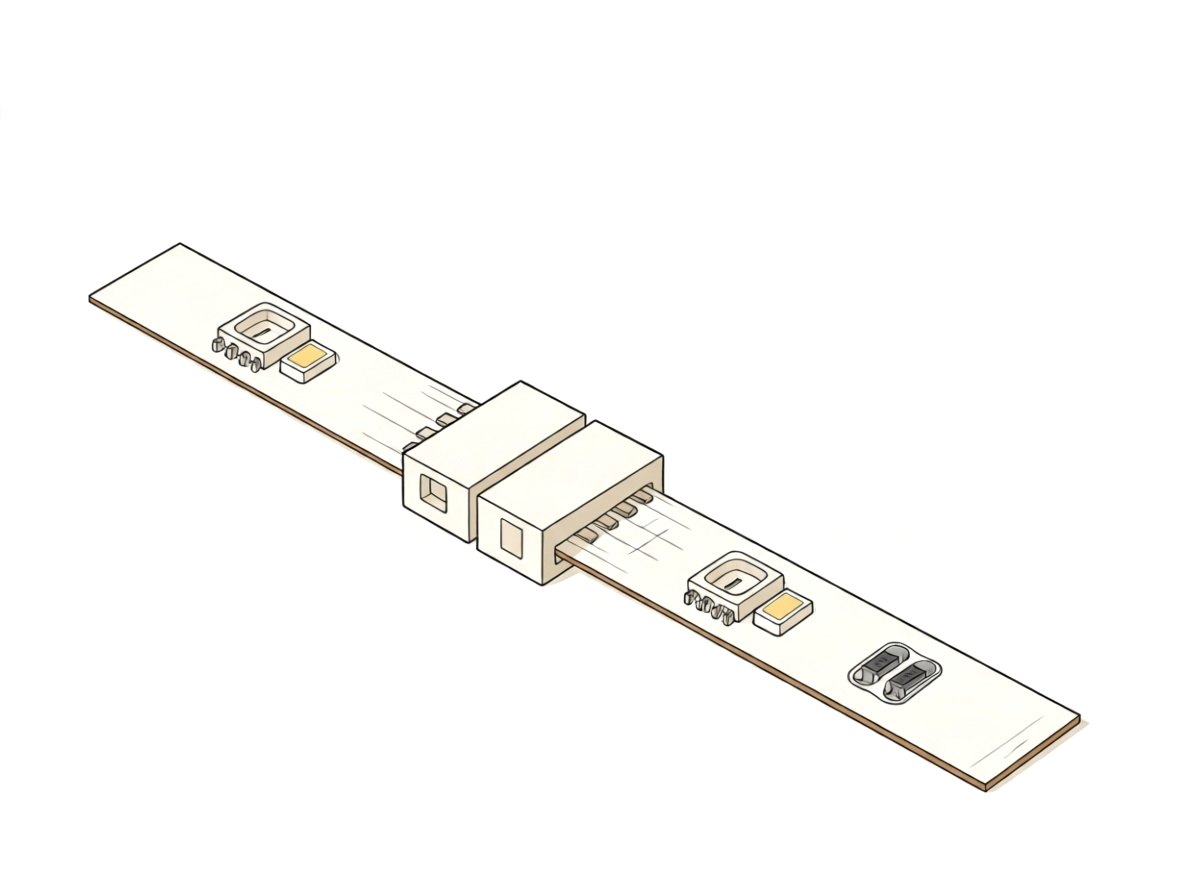
How it connects
Insert the cut tape end with its pads aligned to the five contacts, then snap the cover shut to retain electrical contact. Match channel labels and polarity. A snap cover alone does not establish a waterproof seal.
Male and female halves
The named female side is the tape-receiving clamp; its mate is the flat tape end with exposed pads. Female is descriptive here: the cited makers describe tape connectors, not a standardized male/female plug pair.
Usually connects to
- Cut RGB+W LED tape with five exposed pads matching the clamp width, pad spacing and channel order
Common sizes
- Documented examples accept 10 mm or 12 mm-wide RGBW tape. These are tape widths, not contact pitch. The sampled Commercial Electric port width, pitch and insertion depth remain unverified.
Where it is used
LED tape lightingUndercabinet lightingRGB+W strip extensions and repairs
Variations
- Tape-to-wire lead connector
- Tape-to-tape splice connector
- 10 mm tape versions
- 12 mm tape versions
How to recognise it
Look for a shallow tape-width opening, a snap cover and five parallel electrical contacts positioned over the cut-end pads. Confirm the five pad labels and mechanical fit from the tape and connector specifications; do not infer pitch or compatibility from the outer housing.
Often confused with
| Confused with | How to tell them apart |
|---|---|
| 5-pin RGBW plug/socket | Check the mating end: this clamp receives a flat tape end with exposed pads rather than a separate pin plug. |
| RGBW clamp for a different tape width | Five contacts alone do not establish fit; verify tape width, pad spacing, coating clearance and channel order. |
Also called
5-contact RGBW tape-to-wire connector5-pin RGBW solderless strip connectorRGB+W tape snap connector
Good to know
RGBW connectors may fit 10 mm or 12 mm tape. Check the specific connector and tape; family resemblance does not establish interchangeability.
Related connections
Design with real parts
Crafti checks which parts connect, right in your browser.