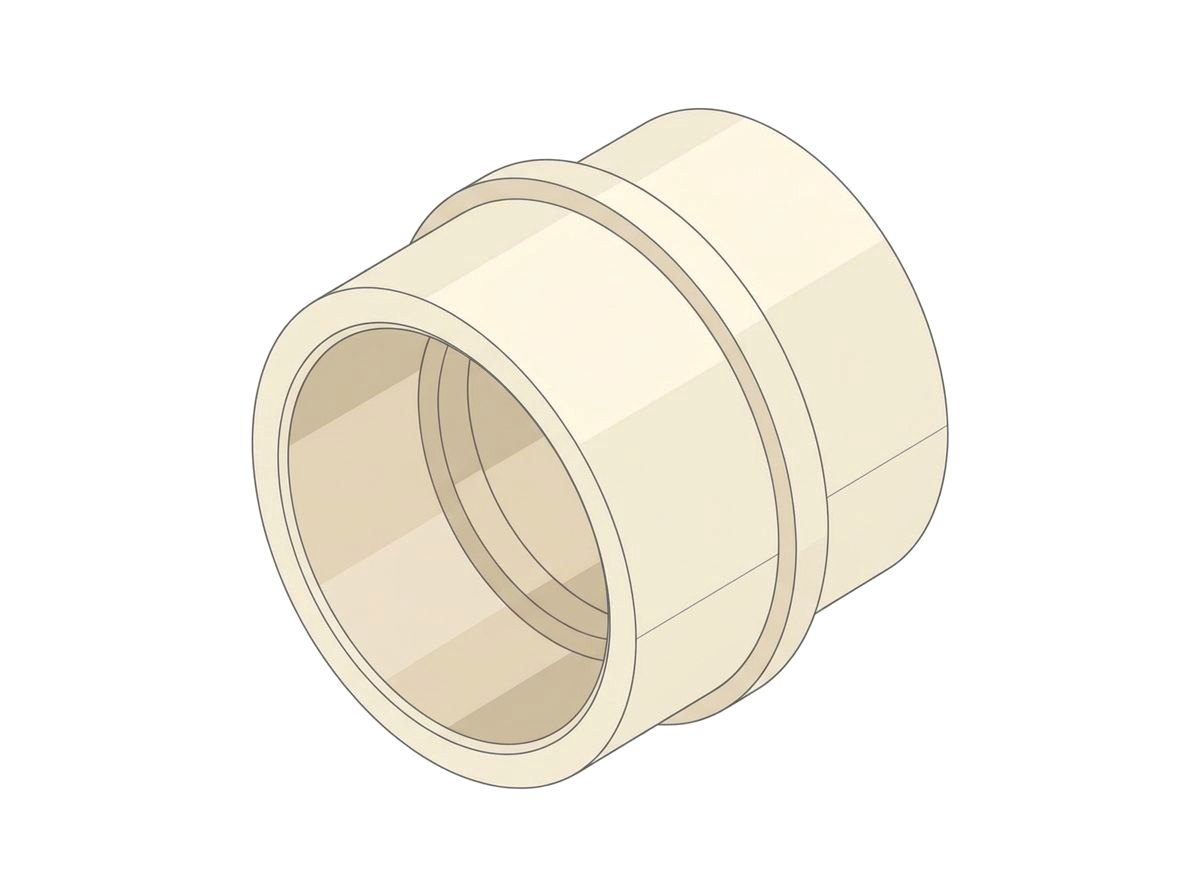
How it connects
Conduit end is pushed fully into the socket after applying PVC solvent cement; the cement softens both surfaces so they fuse into a permanent, non-separable joint. Not a pressure seal; a watertight/dust-tight raceway joint.
Male and female halves
This is the female (socket/hub) half; the male half is the plain end (spigot) of the conduit. Same-OD conduit fits Sch 40 and Sch 80 sockets.
Usually connects to
- Schedule 40 / Schedule 80 rigid PVC conduit (NEMA TC 2)
- PVC conduit spigot ends of fittings
Common sizes
- Trade sizes 1/2 in to 6 in in North America (1/2 in conduit OD 0.840 in / 21.3 mm, same as IPS pipe).
Where it is used
electrical racewaysresidential and commercial wiringunderground conduit runs
Variations
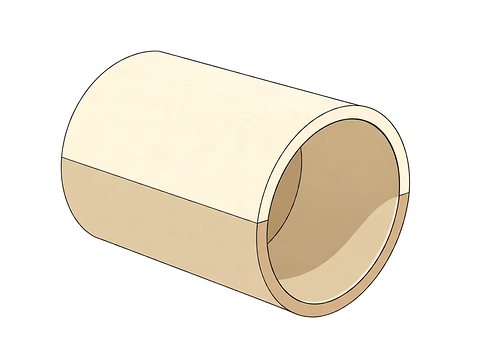
- coupling socket
- box hub socket (FS/FSE boxes)
- belled conduit end
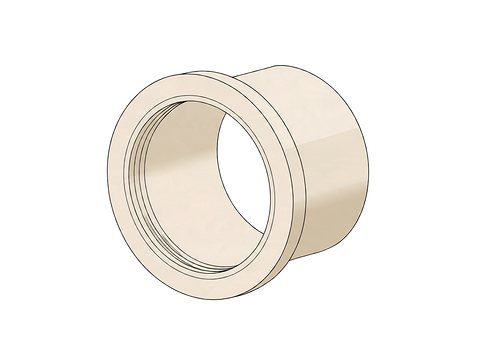
- female adapter (socket one end, FNPT other)
How to recognise it
Gray PVC fitting or box with a smooth, slightly tapered round bore at the hub, no threads or set screws, inner diameter just over the conduit OD and a shallow stop shoulder at the bottom.
Often confused with
| Confused with | How to tell them apart |
|---|---|
| PVC pressure pipe solvent-weld socket (ASTM D2466) | Same IPS OD, but conduit fittings are gray, marked for electrical use, and have shorter, non-pressure-rated sockets. |
| Female NPT threaded hub | Threaded hub has internal threads; a solvent socket is a smooth bore. |
| Kee Klamp / slip pipe clamp | Clamp fittings are set-screw metal; solvent sockets are smooth plastic bores with no fasteners. |
Also called
PVC conduit socketslip socketglue hubsolvent cement socketbell end (on belled conduit)
Related connections
Design with real parts
Crafti checks which parts connect, right in your browser.