How it connects
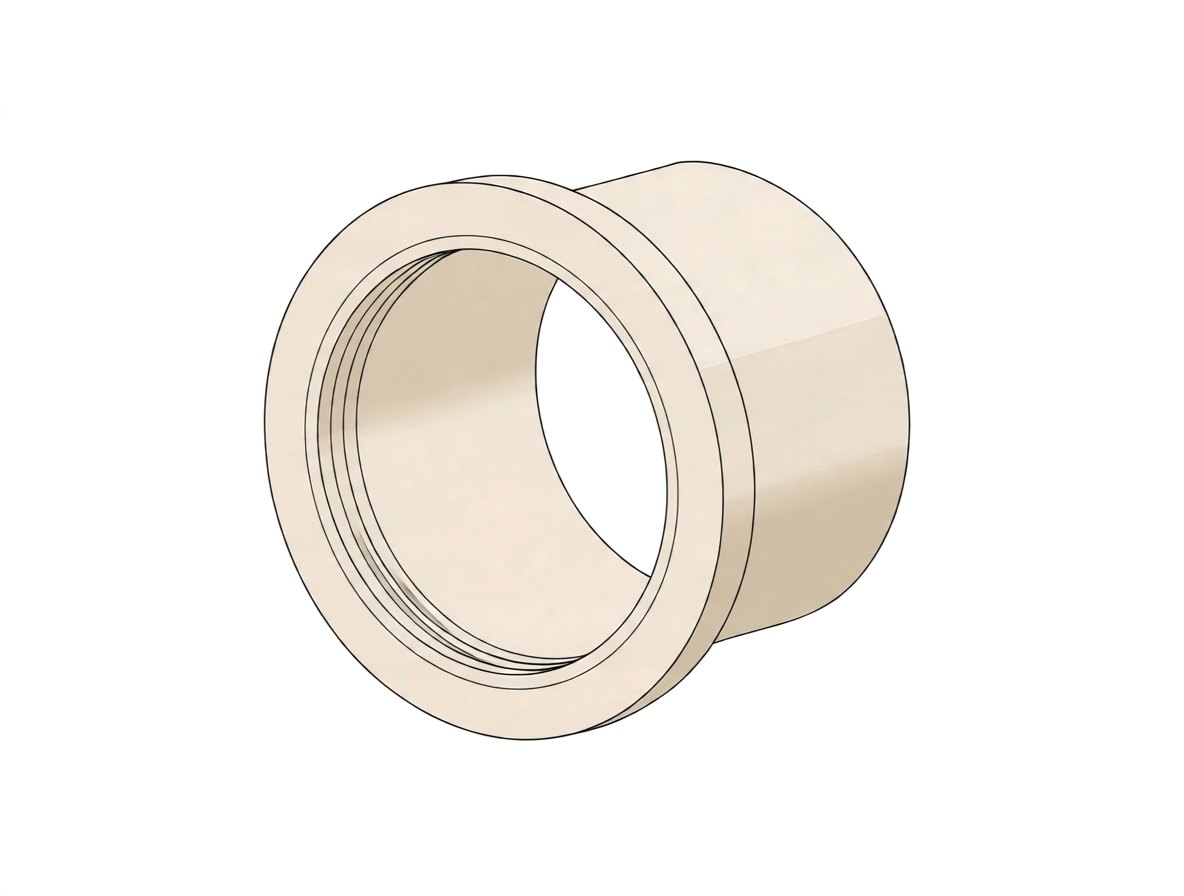
Spigot is pushed through the knockout from inside until the flange bears on the inner wall. Outside, a PVC coupling or adapter is solvent-cemented onto the spigot, trapping the wall. There is no thread or locknut. The flange holds it in place.
Male and female halves
Male (spigot) to the conduit side; it passes through the box's knockout hole. The flange is the retaining shoulder. The mating female is a PVC slip coupling or female adapter socket.
Usually connects to
- electrical enclosure / junction box knockout (wall clamped)
- PVC conduit coupling or female adapter (solvent welded over the spigot)
Common sizes
- Conduit trade sizes, about 1/2 in to 6 in. Cantex lists 1/2, 1-1/4, 2 and 3 in items, among others. The spigot OD matches Schedule 40/80 PVC conduit OD (3/4 in ≈ 26.7 mm) to suit the standard knockout for that trade size.
Where it is used
electrical PVC conduit systemsconnecting nonmetallic conduit to enclosures and junction boxes
Variations
- Schedule 40/80 PVC box adapter
- different brands (Cantex, Carlon E996 series)
How to recognise it
Short, smooth gray PVC sleeve with a thin raised flange ring at one end, no threads, no locknut. The barrel OD equals the PVC conduit OD for that trade size, and the bore is open through.
Often confused with
| Confused with | How to tell them apart |
|---|---|
| PVC terminal adapter (male adapter) | A terminal adapter has a male NPS thread and is held by a locknut. A box adapter is smooth with a flange and is retained by a cemented coupling. |
| Snap-in knockout cable connector | Snap-in connectors have spring tabs that grip the knockout edge and take cable, not a conduit coupling. |
Also called
PVC box adapterconduit box adapterenclosure box adaptermale slip x enclosure adapter
Good to know
The trade name is box adapter. The mating fitting is outside the box, trapping the knockout wall between the flange and the fitting.
Related connections
Design with real parts
Crafti checks which parts connect, right in your browser.