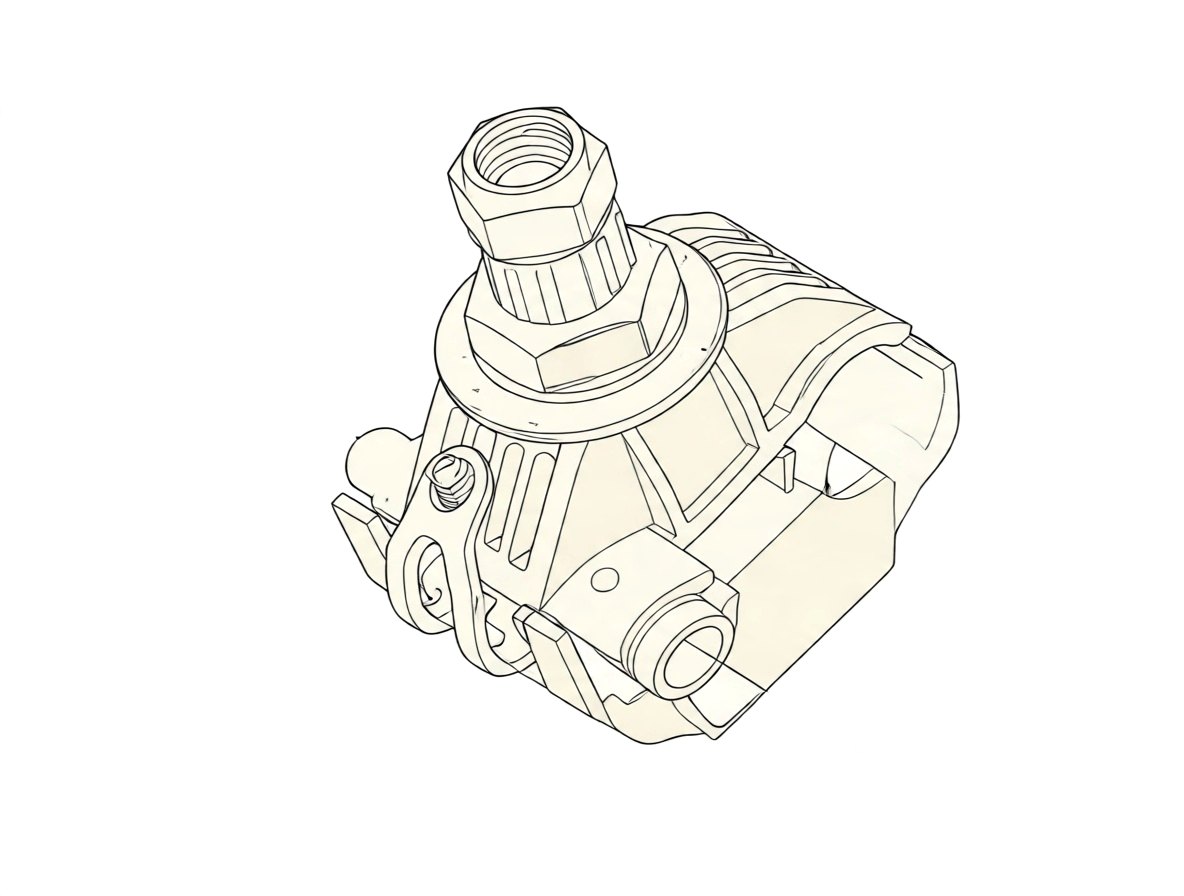
How it connects
Clamping via a shear-head bolt forces metal teeth through the cable insulation into contact with the core conductor without requiring wire stripping; rubber or elastomer seals enclose the penetrated area.
Male and female halves
Female socket/clamp channel that receives an insulated male conductor wire.
Usually connects to
- Insulated copper or aluminium wire
- Stranded or solid insulated branch/tap conductor
Common sizes
- #14 AWG to 500 kcmil (typical branch/tap ranges from #14 AWG to 4/0 AWG; main line ranges up to 500 kcmil or 750 kcmil).
Where it is used
Electrical distributionOverhead service dropsPanelboards and subpanelsMetering equipmentStreet lighting taps
Variations
- Main-to-Tap IPC
- Tap-to-Tap / Splice IPC
- Dual-rated (Al/Cu) IPC
How to recognise it
Enclosed polymer clamp housing with one or two wire pass-through channels, equipped with internal tin-plated copper/aluminum teeth and a hexagonal torque-limiting shear bolt on top.
Often confused with
| Confused with | How to tell them apart |
|---|---|
| IDC (Insulation Displacement Connector) | IDCs (like telecom Scotchlok or ribbon cable IDC headers) press small-gauge wire into stamped V-blades without a high-torque bolt, whereas heavy IPCs use heavy metal teeth driven by a shear-off bolt into power conductors. |
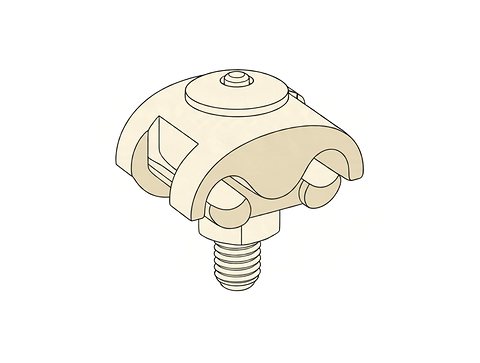
| Mechanical split-bolt connector | Split-bolt connectors require bare or stripped wire ends with manual insulation wrapping, whereas IPCs bite directly through existing wire insulation. |
Also called
Insulation Piercing Tap ConnectorIPC tapKUP-L-TapB-TAP
Good to know
Connector bodies are typically rated for 600V application and allow tapping energized or non-energized conductors safely without stripping jacket insulation.
Related connections
Design with real parts
Crafti checks which parts connect, right in your browser.