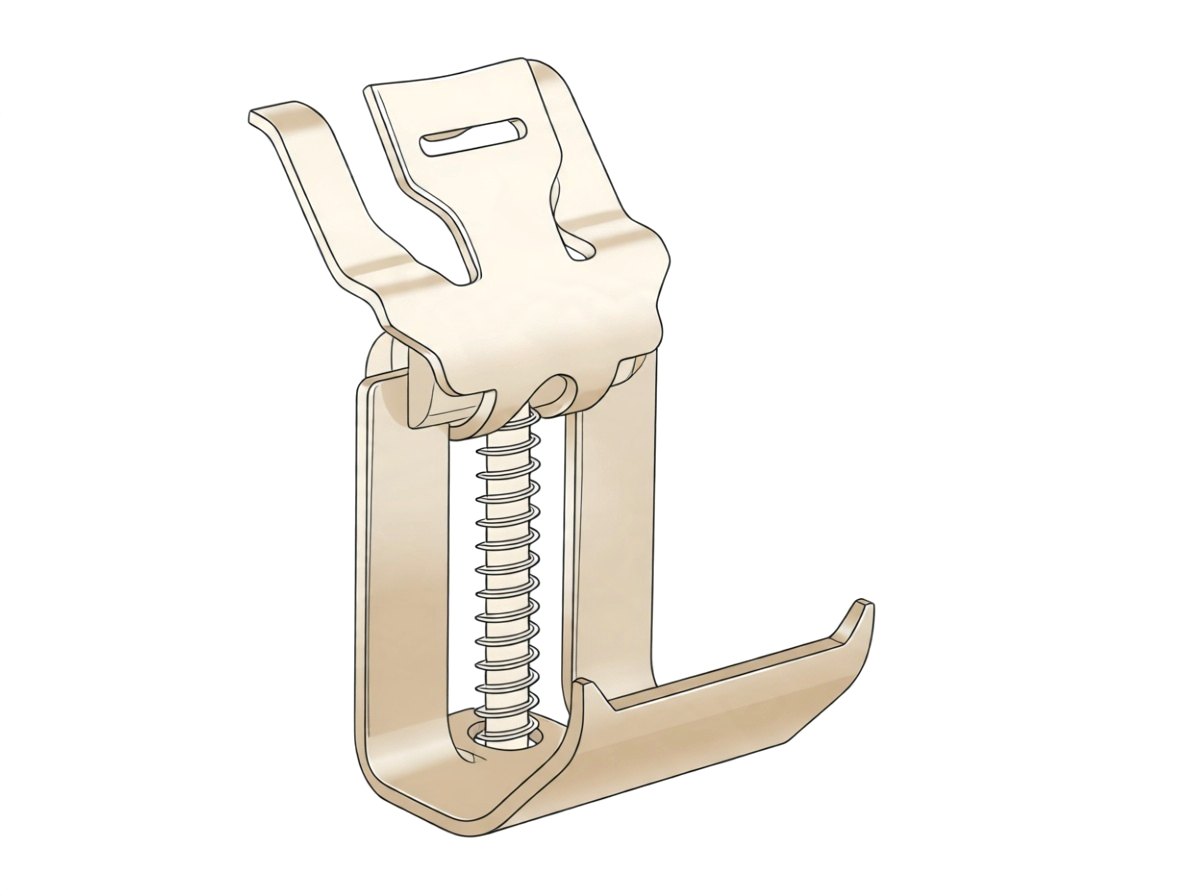
How it connects
The perimeter rim rests directly on the countertop cutout surface over a bead of silicone or plumber's putty, clamped from below via screw-tightened under-rim mounting clips.
Male and female halves
Genderless / seated flange interface; the perimeter sink flange overlaps and clamps onto the flat top and under-edge of the countertop cutout.
Usually connects to
- Matching-template countertop cutout in laminate, solid surface or stone, including kitchen/vanity tops
- Matching under-sink mounting clips
- Matching laundry/utility/slop-sink rim
- Silicone sealant or plumber’s-putty bead at the rim
Common sizes
- Use the manufacturer cutout template. Rim width commonly 0.5–1.5 in (12.7–38.1 mm), with about 1/2–1 in overlap; clip jaw ranges can be 1/2–1-3/8 in (12–35 mm).
- Sink envelopes range from about 15 × 15 to 33 × 22 in and larger; lavatory ovals often 17–20 in wide and kitchen sinks 25–33 in. Overall dimensions do not define the cutout.
Where it is used
Residential/commercial kitchensLaundry/utility/service basinsBar sinksBathroom vanitiesCountertop sink installation
Variations
- J-channel rim with slide-in clips; U-channel rim with claw clips
- flat rim with pre-punched fastener holes
- beveled / low-profile micro-rim
- Integral cast straddle legs with threaded set screws; Bolt-on adjustable straddle legs
- Separate clamp mounting block adapter; stainless steel with mounting clips
- round, oval and rectangular rims; oval lavatory self-rimming
- vitreous china / cast iron (sealant only)
- dual-mount sinks (drop-in or undermount)
How to recognise it
Recognizable by the horizontal outer perimeter lip or flange extending outward from the sink bowl with a downward-turned edge or under-rim channel designed to capture mounting clip hooks.
Often confused with
| Confused with | How to tell them apart |
|---|---|
| Undermount Sink Flange | Undermount flanges install underneath the countertop cutout surface using epoxy anchors or clips, whereas topmount rims overlap the finished top surface. Undermount rims attach to the underside of the counter and the counter edge is visible over the bowl; drop-in rims sit visibly on top. |
| Flushmount Sink Rim | Flushmount sinks sit recessed into a routed rebate flush with the countertop surface rather than resting directly on top. |
| Kee clamp / structural slip-on pipe fitting | Kee clamps slip over tubular metal pipe or railing, whereas a sink rim straddle clamp is a flat or channeled clamp bracket made to grip flat sink rims. |
| Deck-mount faucet shank | Deck mounts pass threaded shanks down through pre-drilled holes on horizontal decks and fasten from below with locknuts. |
| Vessel sink | Vessel sinks sit entirely on the counter over a small drain hole, not in a large cutout. |
Also called
drop-in sink rim; drop-in sink lipself-rimming sink flange; self-rimming sink rim; top-mount sink rim; top-mount sink flangesurface mount sink rim; utility sink rim mount bracketstraddle legsclamp-on rim mountlaundry tray rim clampovermount sink rimdrop-in lavatory rim
Good to know
Standard drop-in/self-rimming sinks rely on this mechanical flange interface to bear bowl loads across the counter deck and create a watertight seal using sealant. Additional standard references: CSA B125.1.
Related connections
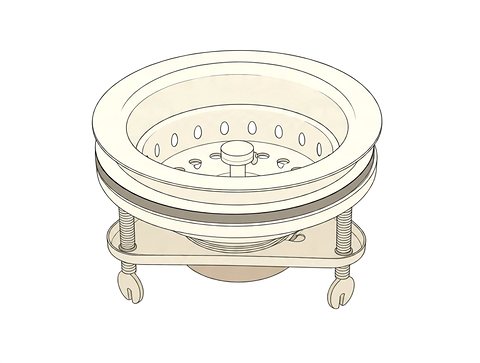
Design with real parts
Crafti checks which parts connect, right in your browser.