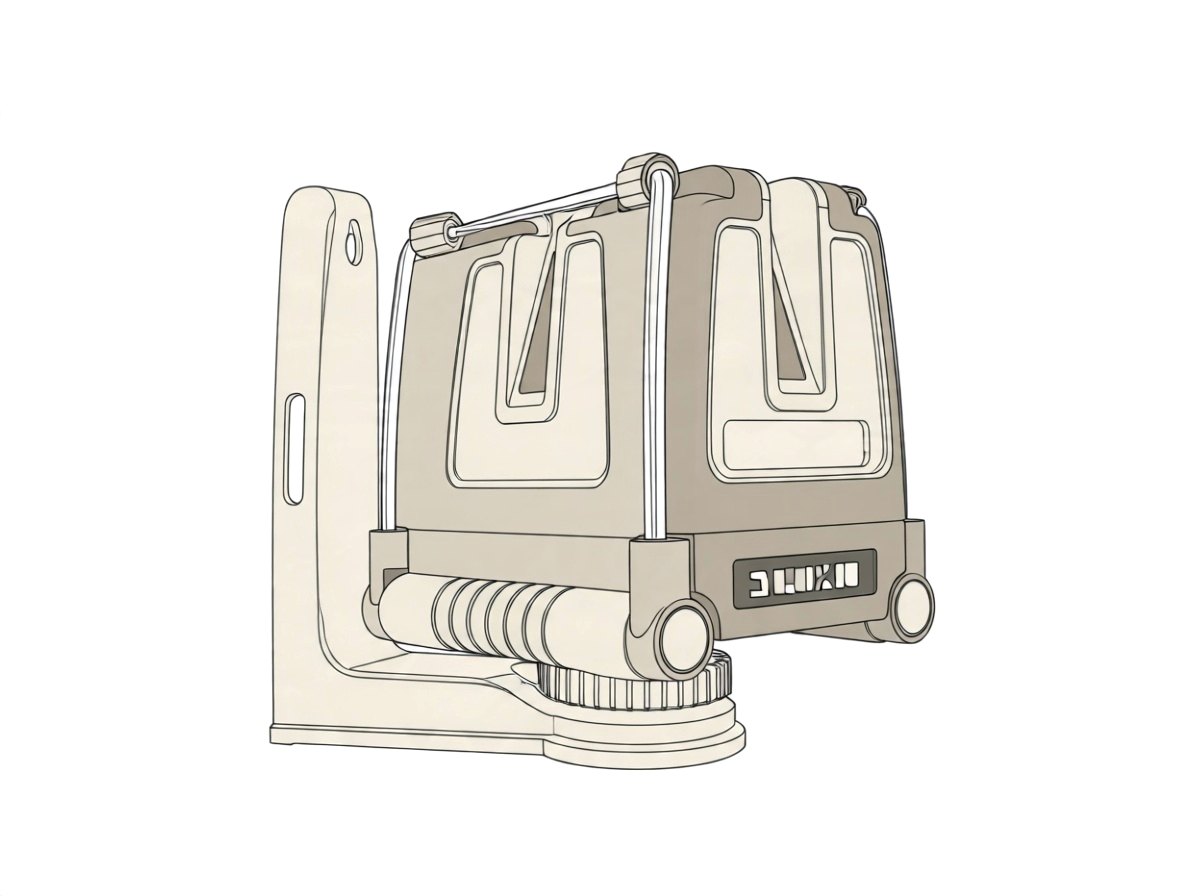
How it connects
Direct magnetic surface attraction held in place by friction against shear forces; requires no mating hardware, fasteners, or prepared receptacle on the ferrous surface.
Male and female halves
Genderless / non-gendered magnetic contact face adhering to a flat or structural ferrous substrate.
Usually connects to
- Ferromagnetic steel surface or target/strike plate, including beams, studs, strut, framing, panels and tracks
- Ferromagnetic duct, floor-register or ceiling/sidewall-grille face
Common sizes
- Tool/bracket magnets commonly 10–30 mm diameter, or circular/rectangular pads about 0.5–2 in, with holding ratings around 1–20+ lb.
- Register-cover bar magnets can be about 1–2 in long × 0.25–0.5 in wide, arranged for 9–16 in registers.
Where it is used
construction layout; Commercial and industrial constructionlaser levelingdial indicator mounting; Removable mounting to steel surfacesmachining setuptemporary work lightingHVAC register air-deflector mounting; residential HVACmagnetic vent coversStrut metal framing assembly
Variations
- Embedded permanent-magnet base, including switchable on/off
- Neodymium or ferrite/ceramic magnet
- Tripod-thread bracket
- Sliding/recessed bar magnet
- Flexible magnetic tape
- Dual-sided L/T-bracket, angle or washer contact
- Four-point Elima-Draft register attachment
- Rubber-coated base
How to recognise it
One or more exposed circular or rectangular magnet faces (often silver neodymium discs or encased black ferrite magnets) flush on the back or bottom face of a tool or bracket, often paired with rubber non-slip pads.
Often confused with
| Confused with | How to tell them apart |
|---|---|
| 1/4-20 or 5/8-11 tripod mount | Tripod mounts use threaded female sockets or male studs, whereas magnetic mounts use bare or recessed magnet faces adhering flat against steel. |
| Magnet-to-magnet coupling | The counterpart here is ferromagnetic steel, not a specified second magnet with an aligned pole pattern. |
| Threaded magnetic mounting base | A base may have a threaded stud for attaching equipment, but the base-to-steel interface is magnetic; classify those two interfaces separately. This item holds steel mechanically; no electrical contact arrangement is specified. |
| Rectangular register neck connection | Register neck connections insert into or sleeve around sheet metal duct boots, whereas magnetic strip mounts attach directly to the exterior register grille face. |
| Permanent magnetic support | SuperMag magnets are an assembly aid; the manufacturer requires bolting for permanent installation. |
Also called
Magnetic base/backing/mounting faceMagnet-to-steel attachmentRare-earth/bar-magnet mountMagnetic vent/register bracketTemporary magnetic holding contactMagnetic assembly aid
Good to know
Commonly integrated directly into layout tools such as laser levels, angle finders, and dial indicator bases to allow hands-free positioning on structural steel.
Related connections
Design with real parts
Crafti checks which parts connect, right in your browser.