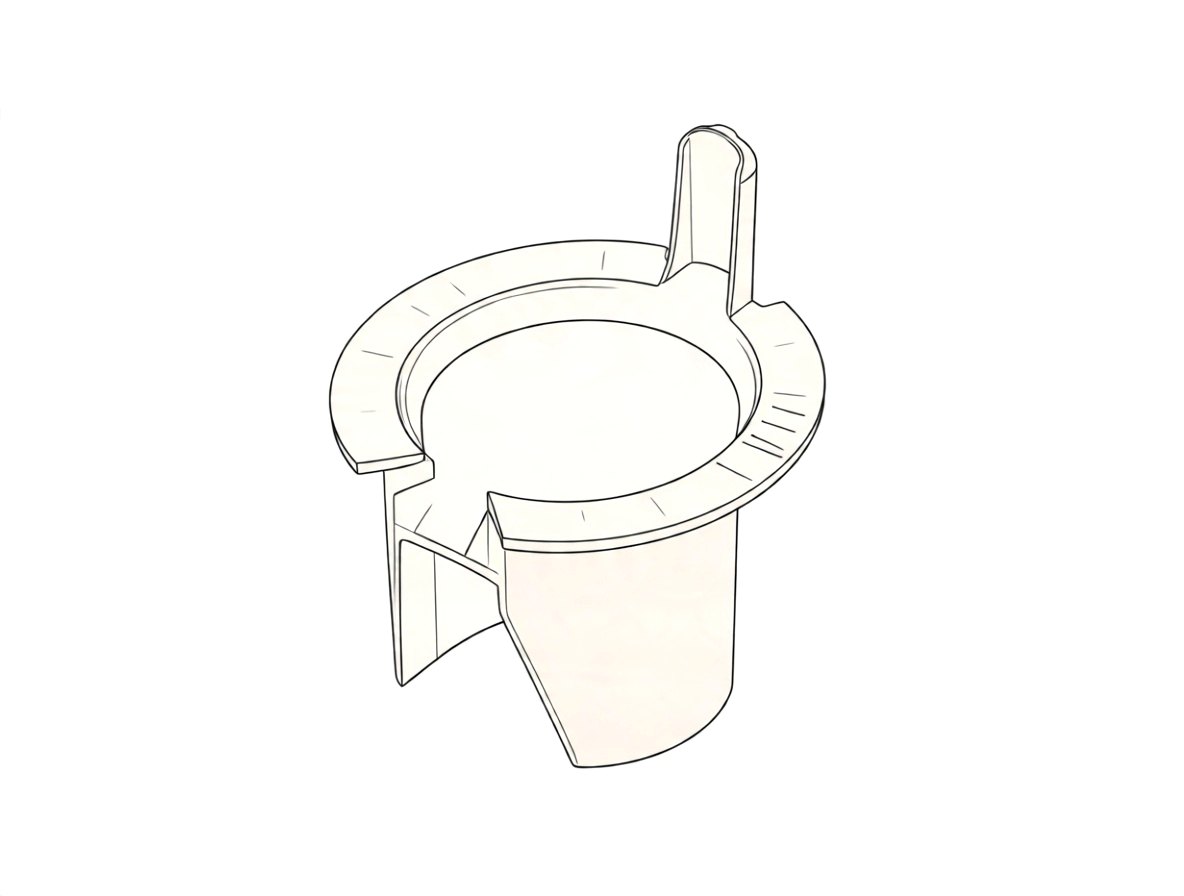
How it connects
Pushed by hand into the cut end of flexible conduit or armored cable; the split tubular barrel compresses slightly to grip the inside wall while the flange seats against the rough cut rim.
Male and female halves
Male push-in sleeve mating into the female interior bore/end of flexible conduit or cable armor.
Usually connects to
- Cut AC/BX or MC cable armor, with the bushing inside the sheath end
- Cut FMC/Greenfield conduit bore
- AC/MC/FMC box connector surrounding the protected end
Common sizes
- Trade sizes No. 0–8 cover cable/conduit from about 5/16 in to 2–2-1/2 in, with cable sizes from 14/2 AWG upward.
- No. 0 is used for 5/16 in or roughly 3/8 in cable; 7/16 in is a common bushing size for 3/8 in FMC/AC.
Where it is used
flexible metal conduit installationsresidential and commercial electrical wiringarmored cable and flexible conduit terminations
Variations
- split barrel with indicator tab
- tapered sleeve
- integral connector insulated throat
- red polyethylene redhead
- polycarbonate/clear versions
- sizes by trade number 0-8
How to recognise it
Recognizable as a bright red or orange plastic collar with a split tubular body and a flared lip/flange, often featuring an upright inspection tab protruding from the rim.
Often confused with
| Confused with | How to tell them apart |
|---|---|
| Rigid conduit threaded insulating bushing | Rigid conduit bushings thread onto external conduit threads or locknuts; anti-short bushings are unthreaded split plastic sleeves pushed inside flexible armor. |
| Conduit male slip end / insulated throat bushing | Conduit male slip fits into a matching rigid female socket fitting; an anti-short liner fits directly inside the conduit or cable end. Anti-short bushing goes inside the cut armor and has a slit along its length; slip ends and insulating bushings mate with conduit OD or threads. |
Also called
anti-short bushingredhead bushingASBcable end bushingred head bushingAC/MC/BX cable bushingarmored cable bushing
Good to know
Commonly known in the trade as 'redheads'. Required by NEC 320.40 for Type AC cable terminations, while optional for Type MC unless specified by connector manufacturer instructions.
Related connections
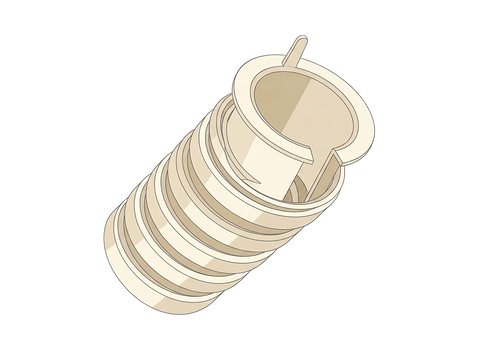 FMC Anti-Short Bushing Receiving End
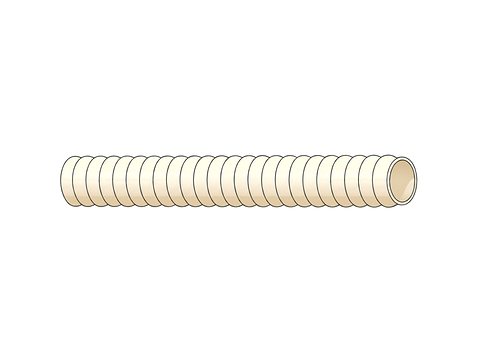 FMC Conduit Plain End
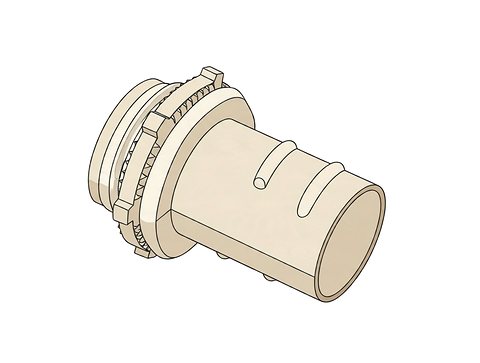 FMC Screw-in Conduit Fitting
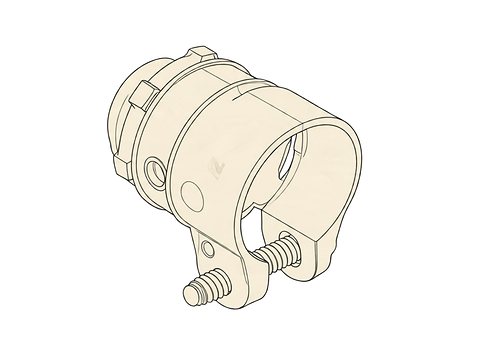 FMC Armored-Cable Squeeze-Clamp Socket
Design with real parts
Crafti checks which parts connect, right in your browser.