How it connects
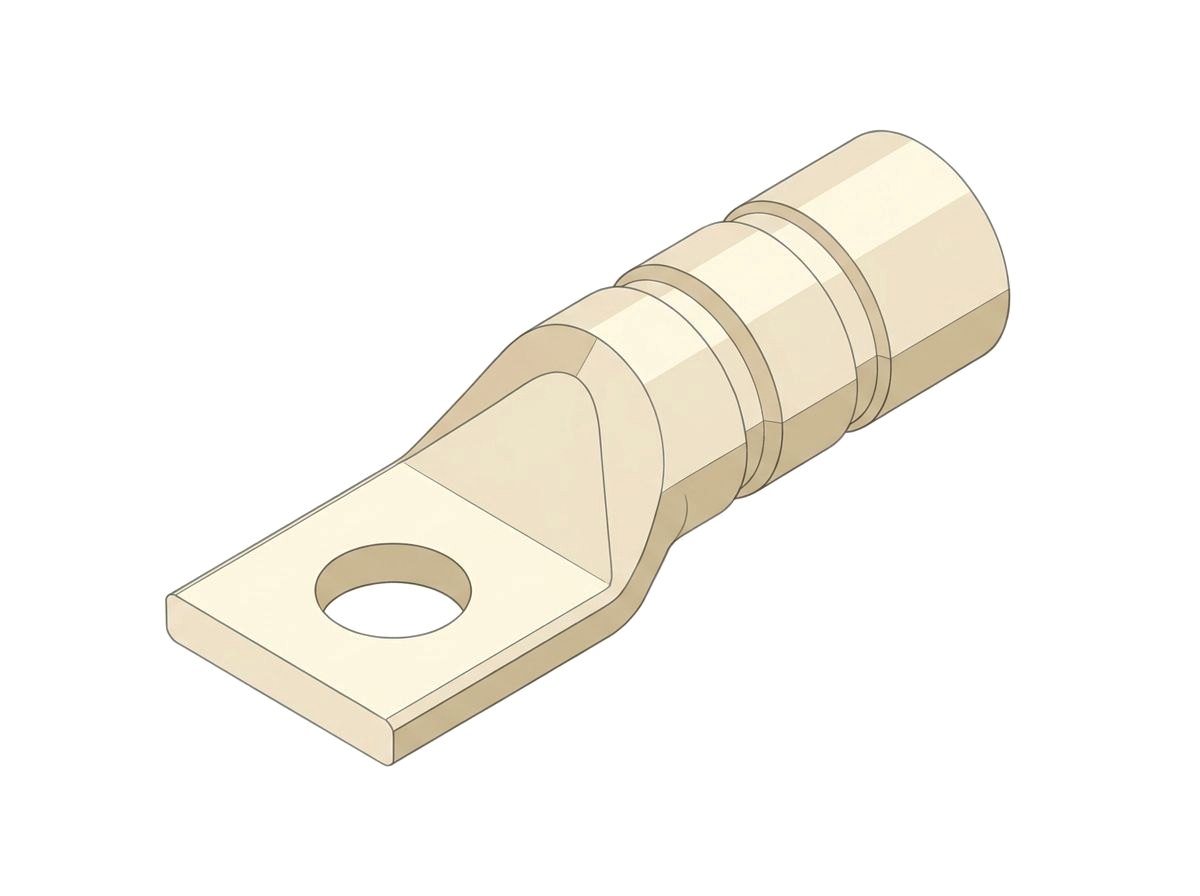
A stripped stranded copper wire is inserted into the cylindrical female bore until seated, then permanently crimped using calibrated compression dies that collapse the barrel around the strands for an airtight electrical joint.
Male and female halves
Female cylindrical barrel (socket) that accepts a male bare stranded conductor wire inserted into its bore.
Usually connects to
- Stripped solid or stranded copper conductor, including Class B/C, flexible DLO and welding cable
- Stripped solid or stranded aluminum conductor where the connector permits it
Common sizes
- Conductor ranges extend from 14 AWG to 1000 kcmil (MCM), approximately 2.5–500 mm²; many industrial barrels start at 8 AWG (about 10 mm²).
- Examples include 4 AWG, 1/0–4/0 AWG and 250–750 kcmil. Bores span roughly 4–35 mm, with about 13.9 mm for one 4/0 AWG barrel.
Where it is used
Commercial/industrial power distributionSwitchgear, motor controls and panelboardsTelecom and battery power feedsBattery/inverter systemsIndustrial grounding/bonding
Variations
- Standard/short or long barrel, including double-crimp long barrels
- Blind end or inspection sight window
- Flared entry for fine-strand/flexible cable
- Chamfered entry
- Tin-plated copper
How to recognise it
A cylindrical seamless tubular copper sleeve (often electro-tin plated) with knurled or color-coded bands and stamped die index numbers indicating crimp locations, conductor AWG/kcmil size, and inspection sight hole.
Often confused with
| Confused with | How to tell them apart |
|---|---|
| Mechanical set-screw lug barrel | Mechanical lugs use threaded clamping bolts/screws to hold conductors without crimping dies, whereas compression barrels are smooth cylinders crimped with matching die sets. Mechanical lugs secure wire using a set screw or bolt, whereas compression crimp barrels are smooth cylinders crimped shut with a die. Mechanical lugs secure wire using a set screw or bolt, whereas compression barrels require crimping dies to deform the barrel. Mechanical lugs use threaded hex screws to clamp the cable rather than a smooth cylindrical tube requiring crimp dies. |
| Plumbing compression fitting | Plumbing compression fittings use threaded nuts and ferrule rings to seal fluid tubes, whereas electrical crimp barrels are permanently plastically deformed onto stranded wire. |
| Mechanical set-screw splice connector | Mechanical splices secure conductors using set screws, whereas compression splices require crimping dies to deform the barrel around the conductor. |
Also called
compression lug barrel; compression terminal barrelcable lug barrelelectrical compression crimp barrel; compression splice barrel; crimp splice barrelwire crimp bucketcable crimp socket; wire crimp socketconductor barrelcopper compression sleeve socketcompression sleeve conductor entry
Good to know
Commonly found on commercial electrical compression connectors (lugs, splices, taps). The barrel can be standard length or long length and may include an inspection window to verify complete wire insertion prior to crimping. Additional standard references: ANSI C119.4.
Related connections
Design with real parts
Crafti checks which parts connect, right in your browser.