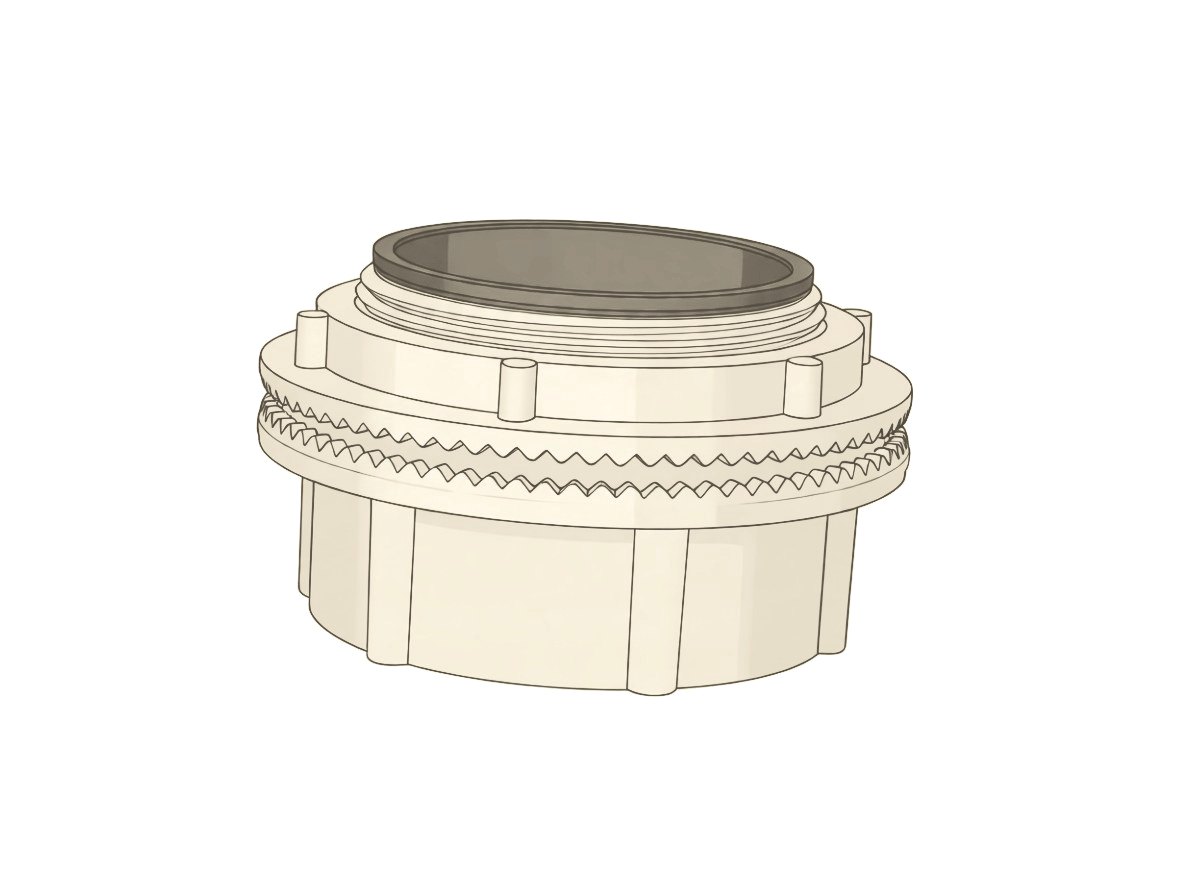
How it connects
The male shank inserts through a punched knockout hole in a sheet metal enclosure or junction box. A threaded locknut screws onto the shank from the interior and is tightened against the wall to clamp the fitting in place.
Male and female halves
Male threaded shank. It passes through a genderless unthreaded knockout opening and mates with a female locknut (or internal female conduit thread).
Usually connects to
- Unthreaded knockout/clearance hole in a junction box or enclosure wall
- Conduit locknut or grounding/bonding locknut
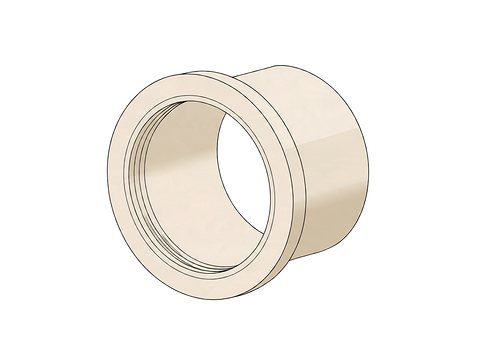
- Female conduit hub or threaded bushing
- Hub sealing O-ring/gasket
Common sizes
- Conduit trade sizes 3/8–6 in; 1/2, 3/4 and 1 in are common in branch-circuit boxes.
- A 1/2 in shank has about 0.840 in (21.3 mm) thread OD, 14 TPI, for a 7/8 in (22.2 mm) knockout; 3/4 in has about 1.05 in OD, 14 TPI.
- Knockouts across 1/2–6 in trade sizes span roughly 7/8–6-3/4 in (22–172 mm).
Where it is used
Conduit wiring/termination, including rigid/IMCJunction-box entriesElectrical panels/enclosuresCommercial/industrial control installationsOutdoor service entrancesNM/Romex cable-clamp connectors
Variations
- liquidtight fitting male shank with sealing ring / O-ring gasket
- metallic conduit connector (EMT / FMC / IMC / rigid) with locknut
- non-metallic / nylon cord grip and conduit connector
- Insulated throat (plastic liner); Non-insulated throat
- Bonding locknut with grounding screw
- Die-cast zinc, malleable iron, or aluminum construction
- stamped steel
- PVC/plastic terminal adapter
How to recognise it
Recognized as a short, straight male thread on the nose of a conduit connector, cord grip, or cable connector, fitted with a flanged/serrated conduit locknut and often an elastomeric sealing ring or washer at the shoulder.
Often confused with
| Confused with | How to tell them apart |
|---|---|
| NPT pipe thread | NPT threads are tapered to create a pressure-tight wedge seal with a female pipe thread. Electrical knockout male threads are straight (NPSM/NPSL) allowing a locknut to thread all the way down against the box wall. The female NPT thread is internal to receive rigid conduit, whereas the mounting shank is external straight threads designed to clamp through a panel wall with a locknut. |
| Metric Cable Gland Thread (ISO Metric M-thread) | Metric threads (e.g., M20, M25) have a 60° metric pitch and standard millimetric outer diameters rather than North American trade sizes (NPSM/NPSL pipe threads). |
| Standard chase nipple or conduit locknut connector | Watertight hub shanks incorporate an integrated sealing ring/O-ring groove and flange on the exterior body to achieve NEMA 3R/4/12/13 watertight enclosure ratings. |
| Snap-in electrical knockout connector | Snap-in connectors use spring-steel retaining clips that click into the knockout opening without threads or a separate locknut. |
| NPSM Straight Mechanical Thread | NPSM is a straight pipe mechanical joint thread with tighter tolerances intended for free-fitting mechanical joints, whereas NPSL has looser thread allowances specifically tailored for running locknuts onto stamped or cast fittings. |
Also called
Knockout male thread; box connector male threadNPSM male conduit threadNPSL locknut threadWatertight hub mounting shankConduit hub male threaded shank; Threaded hub enclosure connector shankKnockout hub mounting nipple; electrical knockout connector hubconduit fitting locknut hub; threaded conduit nipple with locknutNPSL threaded hub
Good to know
Unlike tapered NPT plumbing threads, knockout threads are straight (parallel) conduit/locknut threads (NPSM/NPSL per ANSI/ASME B1.20.1 and UL 514B) designed specifically to clamp through a hole via a locknut.
Related connections
Design with real parts
Crafti checks which parts connect, right in your browser.