How it connects
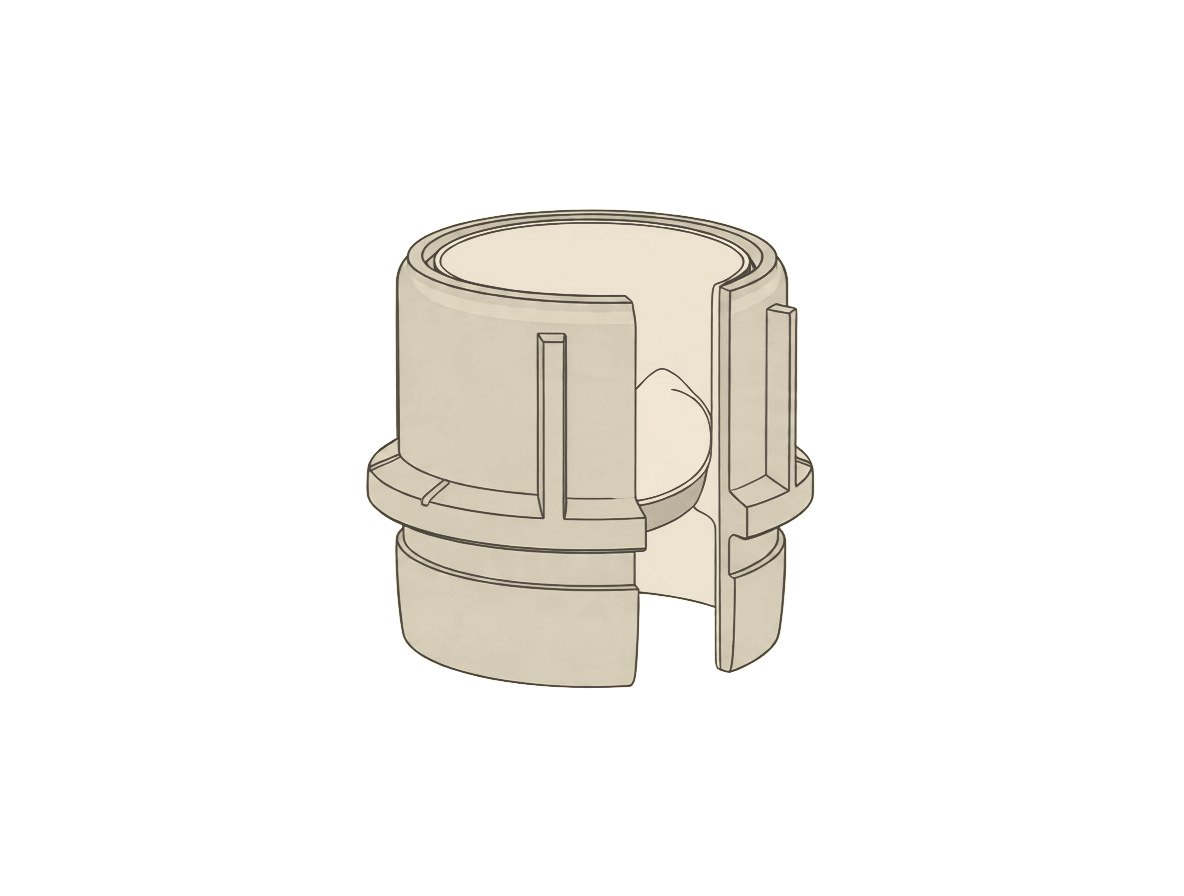
Pushed directly into the knockout aperture. Flexible plastic fingers or spring-steel clip tangs compress during insertion, then snap outward behind the enclosure wall against a stop collar, locking the fitting in place.
Male and female halves
Male fitting nose. It mates with a female circular knockout hole (unthreaded sheet-metal aperture) in an electrical box, cabinet, or enclosure.
Usually connects to
- Matching round knockout in a metal/plastic electrical box, junction box, service panel or enclosure wall
- A 1/2 in trade knockout is about 7/8 in (22.2 mm) actual hole diameter; SG3838AST is one example
Common sizes
- Common knockout trade sizes: 1/2 in for a 7/8 in (22.2 mm) hole; 3/4 in for about 1-3/32 in (listed as 27.8–28.2 mm); 1 in for about 1-3/8 in (35 mm).
- Some products use a 3/8 in knockout designation. SG3838AST uses a nominal 1/2 in knockout; its separate 3/8 in trade designation describes the cable connector.
Where it is used
Residential/commercial branch wiringCable/flexible-conduit entry into boxes, including MC/AC/FMC/NM/Romex/SEJunction boxes and electrical enclosuresService panels/load centersLight-fixture wiring
Variations
- Zinc die-cast with steel spring-clip band, including SNAP-TITE
- Stamped steel
- One-piece plastic/nylon push-in button or NM bushing
- Single/duplex cable entry, including Saddle Grip
- Straight or 90° entry
How to recognise it
Cylindrical unthreaded male snout with a raised perimeter stop shoulder and either integral resilient plastic latches/grooves or a circumferential spring-steel clip with outward retention tangs. Lacks screw threads and locknuts.
Often confused with
| Confused with | How to tell them apart |
|---|---|
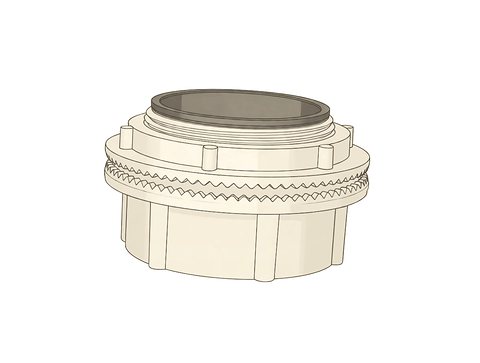
| Threaded Electrical Knockout Male (Locknut type) | Threaded knockout connectors have external male NPS threads and require a locknut spun on from inside the enclosure, whereas snap-in males lock toollessly with spring clips or snap tabs. |
| Conduit slip/set-screw coupling | Conduit slip connectors mate into cylindrical pipe sockets or couplings, whereas knockout snap-in males seat through flat sheet-metal enclosure walls. Slip ends receive conduit/tubing and use set screws or compression; the snap-in end goes into a box knockout hole, not a pipe. |
| Threaded box connector / NPT male end | This attachment uses a spring steel retaining clip at the box opening instead of mating screw threads. |
| Saddle cable clamp | The screw-operated saddle holds the cable at the opposite end; the SNAP-TITE clip holds the fitting in the box. |
| Threaded box connector with locknut (NPS/conduit thread) | Locknut connector nose is male-threaded and uses a separate locknut; snap-in nose is smooth with a slotted spring-steel clip ring. |
Also called
Push-in knockout connectorQuick-snap box connectorSnap-in cable connectorSpring-clip knockout connector; spring-clip box attachmentSNAP²IT connectorSNAP-TITE snap-in knockout connector; snap-tite connector endPush-in box connectorToolless knockout connector
Good to know
Sized by trade size (e.g. 1/2 in) rather than actual diameter; actual male nose OD is approx. 22 mm for 1/2 in trade size knockouts. Standardized to fit sheet-metal knockouts per UL 514A and UL 514B requirements without tools.
Related connections
Design with real parts
Crafti checks which parts connect, right in your browser.