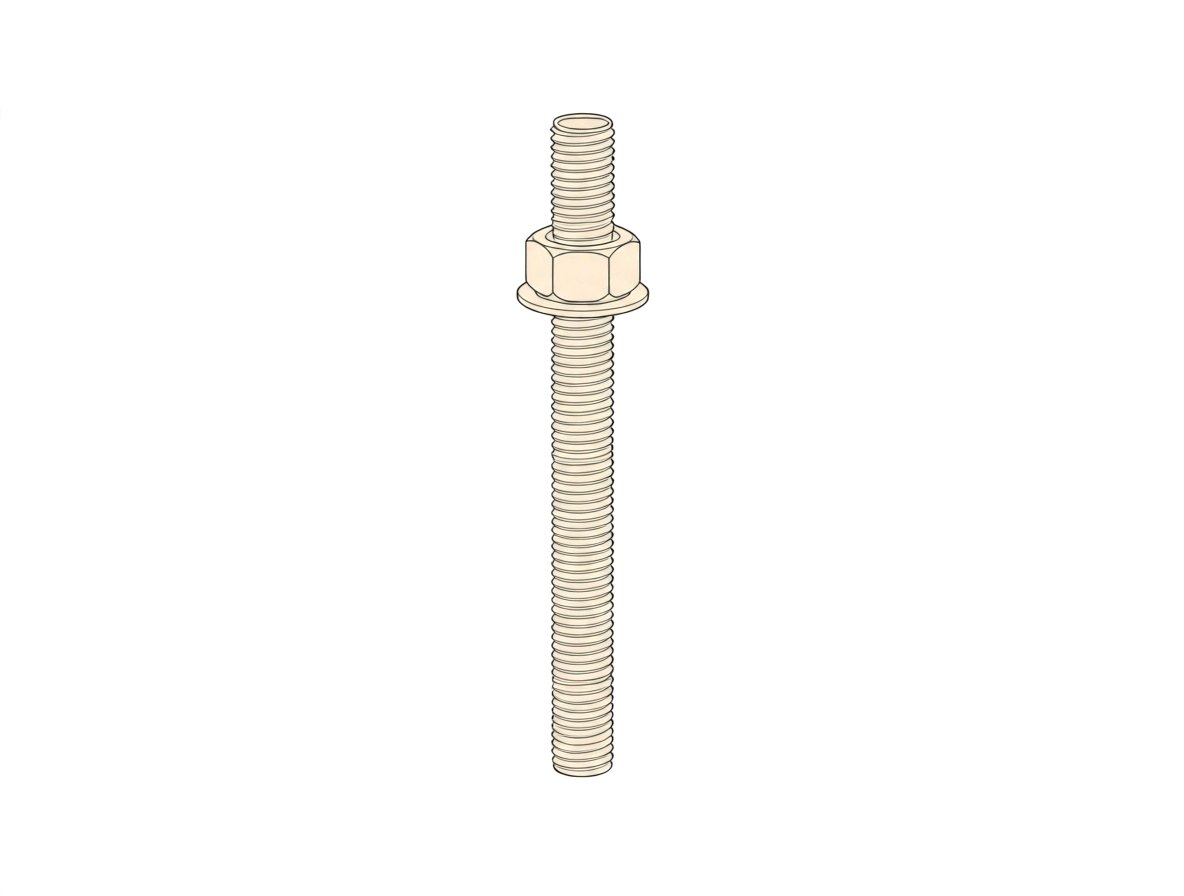
How it connects
A hole slightly larger than the rod is drilled and cleaned, filled with two-part anchoring adhesive, and the rod is inserted with a twist. Load is carried by bond between rod, adhesive and the hole wall once it cures. There is no mating thread.
Male and female halves
This is the male (inserted) half: the rod. The female half is the drilled, adhesive-filled hole in the base material, not a manufactured part. The rod's outer thread also mates a nut on the exposed end.
Usually connects to
- Drilled concrete/masonry hole with injected adhesive or a chemical capsule
- Mesh-screen tube for hollow concrete or brick
- Matching hex nut and washer on the exposed rod thread
Common sizes
- Rod diameters commonly 3/8–1-1/4 in or M8–M30.
- Embedment depends on the system: commonly 4–20 rod diameters; listed examples range from 60 mm to over 300 mm or 3–15+ in (75–400+ mm).
- Drill-hole diameter is typically rod diameter plus 1/16–1/8 in.
Where it is used
Structural concrete/masonry construction and retrofitSteel baseplatesRebar doweling/reinforcementEquipment/railings and heavy machinerySeismic retrofitCivil infrastructure
Variations
- Chisel/angled-tip rod for spin-in glass capsules
- Flat-cut all-thread rod for injection adhesive
- Rebar dowel
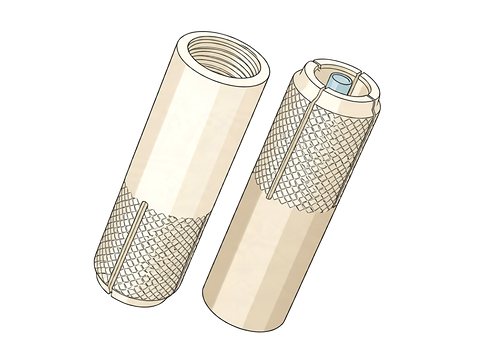
- Internally threaded bonded insert
- Mesh-screen hollow-masonry anchor
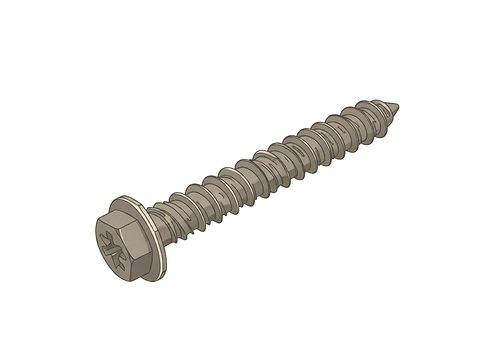
- Headed/flanged retrofit bolt
- Zinc-plated/HDG carbon steel or 304/316 stainless
How to recognise it
Straight all-thread rod (often zinc-plated or galvanized) sold with a nut and washer, frequently with a 45° chisel point on the embedded end; marketing mentions epoxy/adhesive anchoring. Installed, it projects from concrete with a ring of cured adhesive at the hole.
Often confused with
| Confused with | How to tell them apart |
|---|---|
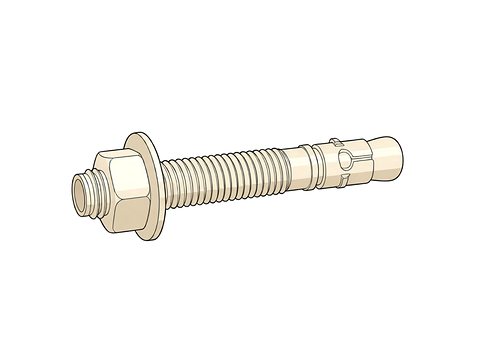
| Mechanical expansion anchor (wedge anchor) | Wedge anchors have a clip/sleeve at the tip and are held by expansion; adhesive anchor rods are plain threaded rod, often with a chamfered or chisel tip, and need adhesive. Wedge anchors use an expansion clip and torque to mechanically grip concrete, whereas adhesive anchor rods rely on chemical bonding resins in the hole. |
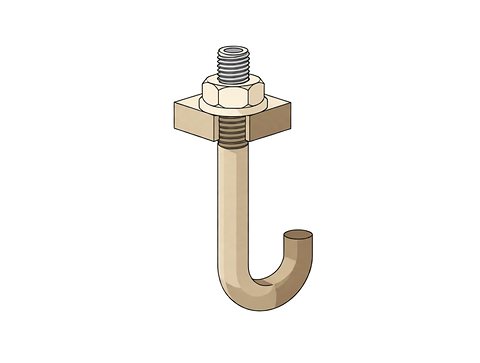
| Cast-in anchor bolt (J/L bolt, headed) | Cast-in bolts have a bent hook or head and are placed before the concrete pours; adhesive anchors are straight and post-installed in drilled holes. |
| Plain threaded rod / UNC thread | The thread itself is a UNC male thread for the nut; the embedded portion's connection is the adhesive bond, not thread engagement. |
| Standard cast-in-place anchor bolt (J-bolt / headed bolt) | Cast-in-place bolts are embedded during concrete pouring, whereas adhesive anchors are post-installed into drilled holes. Cast-in-place anchors are set before concrete is poured; adhesive-bonded anchors are post-installed into cured concrete via drilled holes. |
Also called
retrofit bolt (Simpson RFB)resin anchorchemical anchor studbonded anchor rodepoxy anchor rodadhesive anchor stud; adhesive anchor boltchemical anchor rodepoxy anchor stud
Good to know
The embedded adhesive bond and the exposed UNC/metric nut thread are separate interfaces. The embedded end bonds to a drilled hole rather than to a manufactured female part.
Related connections
 Cast-in Concrete Anchor
 Concrete Drop-in Expansion Anchor
 Concrete Screw Anchor
 Concrete Wedge Expansion Anchor
 Masonry Sleeve Expansion Anchor
Design with real parts
Crafti checks which parts connect, right in your browser.