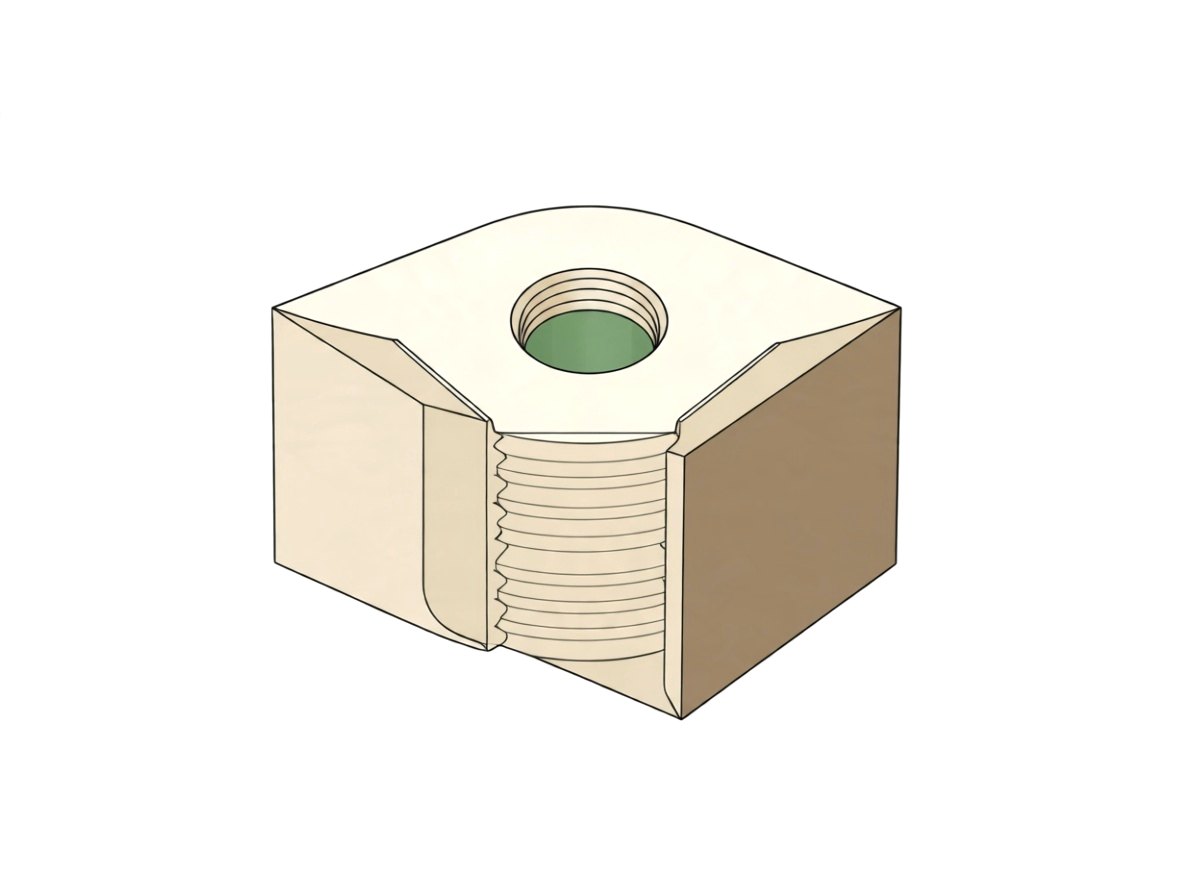
How it connects
A #8 flat-head screw passes through the clearance bore and threads into the substrate behind it (wood, or a tapped/nutted part); the conical head seats in the 82° countersink and clamps the part flush. No seal.
Male and female halves
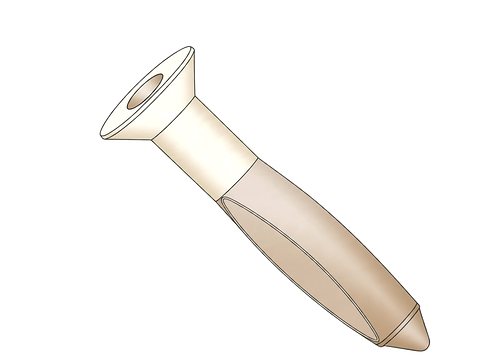
Female/receiving side: the countersunk hole. The male side is the flat-head (countersunk) screw.
Usually connects to
- #8 flat-head wood screw; #8-32 or #8-36 flat-head machine screw
- #6-32 oval-head or flat-head wall plate screw; Countersunk wall-plate screw, usually #6-32 with an oval head; flat (countersunk) head machine screw, e.g. #6-32 cover screw
- 6-32 tapped holes in a receptacle/switch yoke or an outlet/device box ear
- #8 flat-head sheet-metal or self-tapping screw
- M4 countersunk screw (close metric equivalent)
- threaded hole or tapped ear in the electrical box or device
Common sizes
- For #8, listed clearance bores are about 0.17–0.20 in (4.3–5.1 mm); countersinks about 0.31–0.36 in (8–9.5 mm), including 0.33 in (8.4 mm) at 82°. Nominal flat-head diameter is 0.312 in.
- A #6-32 wallplate example uses a 0.138 in screw, about 0.15–0.19 in (3.8–4.8 mm) clearance and 3/8–1 in screw length.
- Other sizes include #4–#14, 1/4 in and up, and M3–M6 at 90°. Confirm seat angle, diameters and sheet thickness on the actual plate.
Where it is used
hardware brackets and corner bracesfurniture and woodworkingsheet metal and machininghinges and mounting platesresidential and commercial electrical wiring devicesswitch/receptacle wall platesweatherproof box coversfurniture and cabinet hardware
Variations
- 82° inch
- 90° metric ISO/DIN
- 100° aerospace
- Clearance or tapped countersink
- Oval-head seat or separate plain pan-head opening
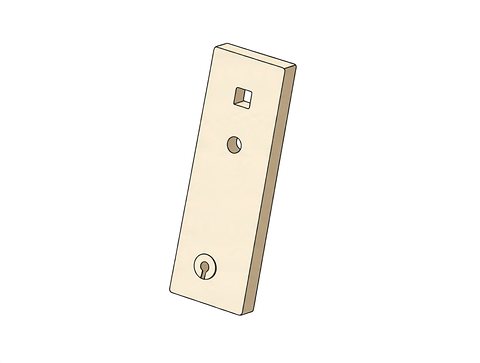
- Slotted adjustment hole
- Formed/dimpled thin-sheet seat
How to recognise it
A round hole with a cone-shaped chamfer at one face, wider than the bore, so a screw head would be recessed flush. Check which face carries the cone: that is the screw-entry side. On stamped brackets it's often on the face that goes against nothing (the face you screw from).
Often confused with
| Confused with | How to tell them apart |
|---|---|
| Counterbored hole | Counterbore has a flat-bottomed cylindrical step for a socket-head or pan-head screw; a countersink is conical. |
| 90° metric countersink | Visually nearly identical; 90° is for metric (ISO 10642/DIN 7991) screws. An inch screw in a 90° hole sits proud. |
| Plain clearance hole | No conical chamfer at the entry; used with pan, round or hex heads. |
| #8-32 box cover / ground screw hole | 8-32 screws (0.164 in) fasten 4 in square box covers and grounding, and they need a larger hole. Wiring-device plates use 6-32. |
| 6-32 tapped (threaded) hole | A tapped hole has visible threads. A clearance hole is smooth and slightly larger than the screw. |
Also called
countersunk clearance hole; countersunk mounting holeCSK hole82° countersink for #8 flat headc'sink holewall plate screw hole; switch plate screw hole; cover plate mounting hole; Wall-plate mounting hole6-32 clearance hole#8 countersunk screw holeflat-head screw clearance hole
Good to know
Countersink angle matters: an 82° seat differs from a metric 90° seat. The #8, 82° Everbilt corner-brace example has estimated 4.8 mm bore and 9.5 mm countersink dimensions. Additional standard references: ISO 15065 (countersinks for tapping screws).
Related connections
Design with real parts
Crafti checks which parts connect, right in your browser.