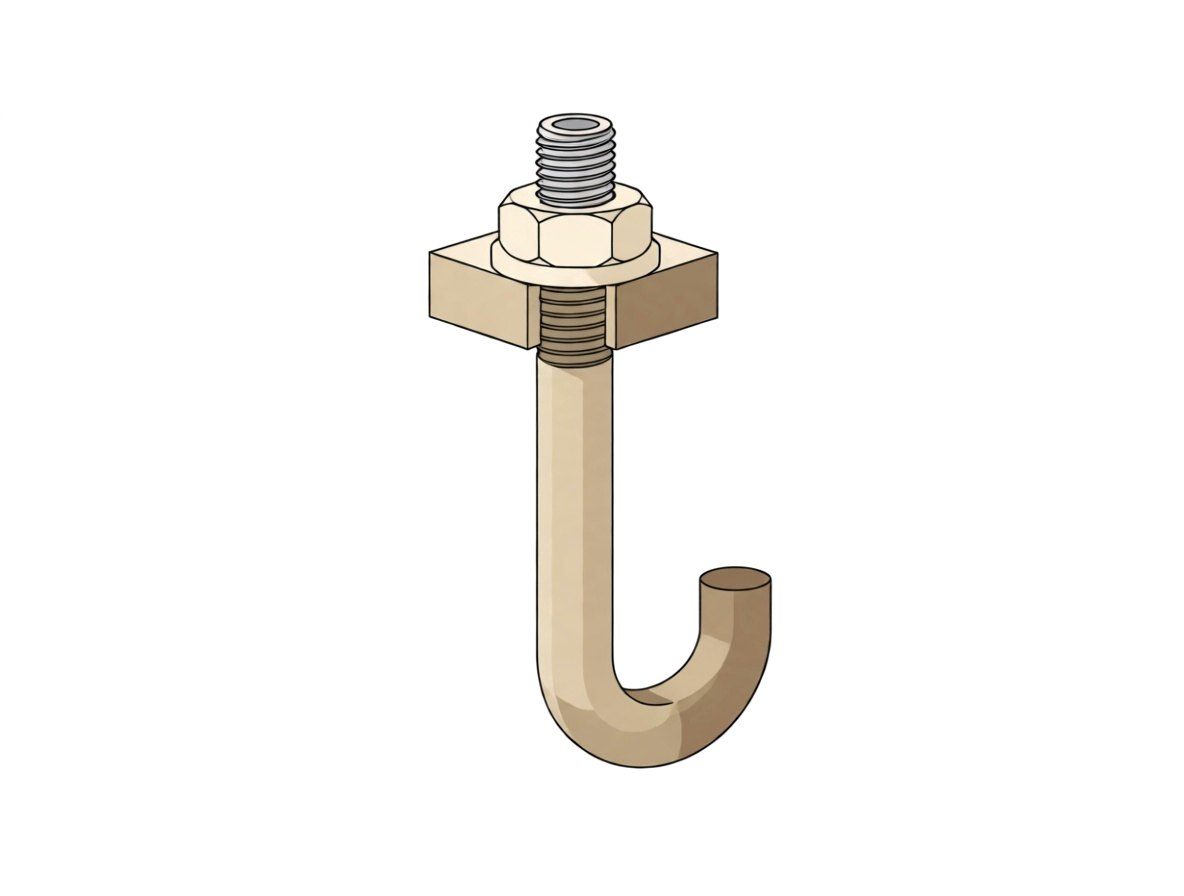
How it connects
Embedded end mechanically locks into solid concrete via mechanical interlock (hook bend, forged head, or embedded plate/nut) as concrete cures; exposed portion fastens fixtures via external machine threads and a tightened nut.
Male and female halves
Male threaded rod/stud protruding from concrete mating with a female hex nut and washer; embedment portion functions as an embedded insert into monolithic concrete.
Usually connects to
- Cured cast-in-place concrete foundation, slab or footing
- Structural steel base/column plate, sill/mudsill plate or post base on the exposed threaded end
- Matching UNC/UN heavy hex nut and washer
Common sizes
- Common diameters range from 3/8–2-1/2 in (about 10–64 mm; M12–M64 versions), with heavy industrial examples up to 4 in. Residential sill-plate anchors commonly use 1/2–1 in.
- Lengths commonly 6–36+ in; listed hook ranges are 1-1/2–4 in (38–100 mm) and 2–6 in. Required embedment determines the selection.
Where it is used
Residential/commercial concrete foundationsStructural steel column basesWood sill/mudsill platesLight poles and sign foundationsHeavy machineryStructural engineering
Variations
- L/90° bent bolt
- J/hooked bolt
- Upside-down hex/square headed bolt
- Straight rod with embedded/welded plate and nut
- Plain, galvanized or stainless steel
How to recognise it
Recognised by a steel threaded stud protruding vertically from a poured concrete slab or foundation footing, secured to base plates with a standard hex nut and washer. Below the surface, the rod terminates in an L-bend, J-hook, or hex head/bearing plate.
Often confused with
| Confused with | How to tell them apart |
|---|---|
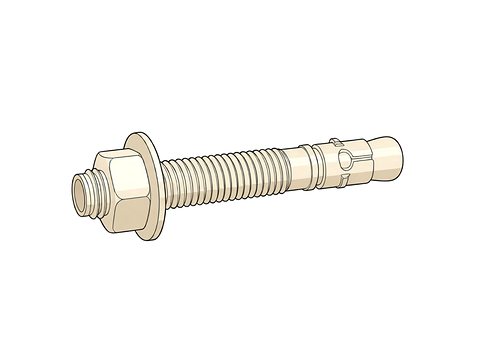
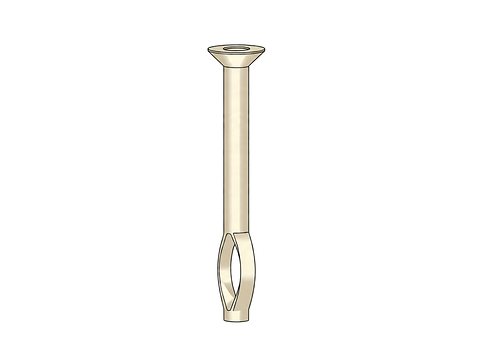
| Post-installed concrete anchor (wedge anchor / sleeve anchor / drop-in anchor) | Cast-in anchor bolts are placed prior to concrete pour and cannot be installed into hardened concrete without core drilling; post-installed anchors require a pre-drilled hole in hardened concrete and expand or bond with adhesive. |
| Cast-in anchor channel (C-channel) | Anchor channels feature an embedded slotted channel flush with the concrete surface accepting T-head channel bolts, rather than an individual protruding threaded rod. |
| Post-installed wedge anchor / expansion anchor | Wedge anchors are installed into pre-drilled holes in cured concrete with an expansion clip, rather than cast into wet concrete with a 90-degree bent hook. |
| Cast-in-place headed anchor bolt | Headed anchor bolts feature a forged or threaded hex head/nut at the embedment end rather than a bent L-shaped hook. Headed anchors have a forged hex head or welded plate washer at the embedded end rather than a smooth bent hook/L-bend. |
| Post-installed mechanical anchor (wedge or sleeve anchor) | Post-installed anchors are inserted into pre-drilled holes in already-cured concrete and expand, whereas bent anchors must be cast directly into wet concrete. |
Also called
Cast-in-place anchor bolt; cast-in-place L-anchorCast-in anchor rodEmbedded anchor boltJ-boltbent anchor boltbent foundation bolthooked anchor bolt; foundation anchor bolthook bolt embedment
Good to know
Often referenced generally by specific shapes such as J-bolt or L-bolt, but standardized comprehensively under specifications such as ASTM F1554 (Grades 36, 55, and 105). Embedment depth and projection are installation- and code-dependent. Additional standard references: IBC (Section 1905).
Related connections
Design with real parts
Crafti checks which parts connect, right in your browser.