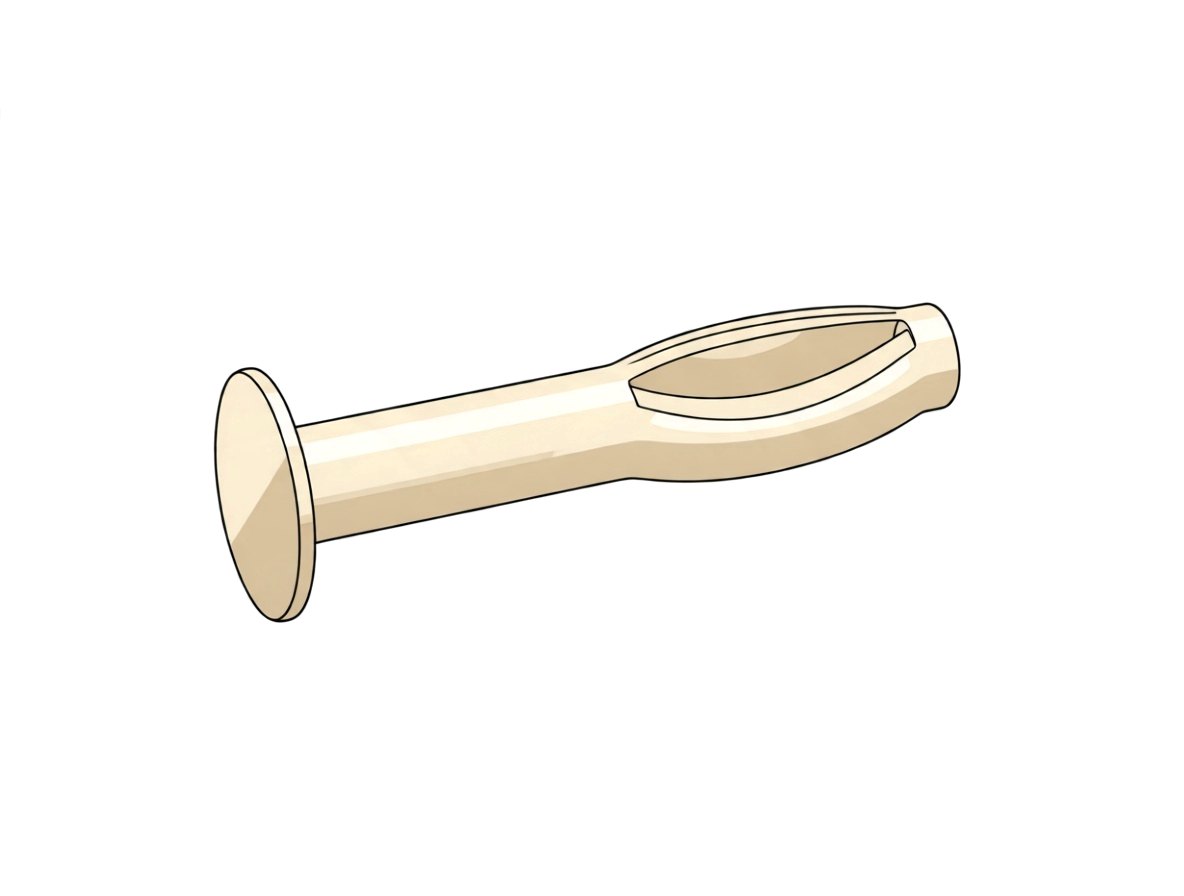
How it connects
Driven with a hammer into a pre-drilled hole of matching nominal diameter; the bowed split halves compress on entry and exert continuous outward spring force against the hole walls.
Male and female halves
Male anchor body driven into a female drilled hole in solid masonry base material.
Usually connects to
- Correctly drilled hole in concrete, brick, block, stone, drywall or hollow wall as rated for the anchor
- Fixture clearance hole in wood or steel
- Matching hex nut and washer on threaded versions
Common sizes
- Light-duty diameters commonly 3/16–1/2 in, especially 1/4 in (6–6.35 mm); heavy strike anchors reach 3/4 in, including 3/8, 1/2 and 5/8 in.
- Lengths vary by system: 3/4–3+ in for light duty, 1-1/4–4 in in one 1/4 in line, and 1-3/4–6+ in for larger types.
- Embedment examples include 1–1-1/2 in (25–38 mm) for drywall fixtures and a 1-1/4 in minimum for another line.
Where it is used
Residential/commercial light-to-medium concrete/masonry fasteningConduit/fixture mountsWood-to-concrete and drywall/framing tracksCloset/shelving mountsLight hollow-wall anchorsTamper-resistant fasteningFlashing/roofing
Variations
- countersunk flat head (CSD)
- round/mushroom head (MSD / SDR); mushroom head pin drive anchor; round head / pan head drive anchor
- duplex head (DSD) for concrete forming
- zinc-plated carbon steel; zinc alloy body with carbon or stainless steel pin
- mechanically galvanized carbon steel
- Molded plastic shelf bracket preloaded expansion anchor with smooth plastic pin
- Zamac alloy hammer drive pin anchor with steel pin; All-steel pin drive expansion anchor with threaded stud
- threaded strike anchor with nut and washer
How to recognise it
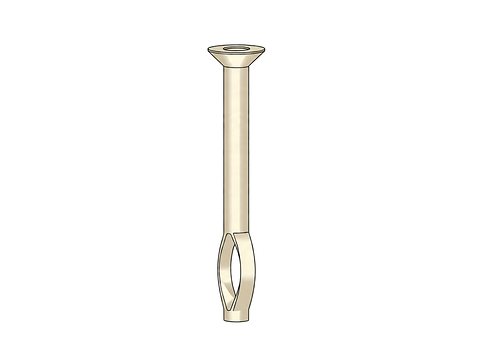
Recognized by a solid one-piece steel shank whose lower half is split longitudinally into two bowed, spring-like halves with an outward bulge, topped with a flat countersunk, round, or duplex head without tool drive recesses.
Often confused with
| Confused with | How to tell them apart |
|---|---|
| Hammer drive pin anchor | Hammer drive pin anchors consist of a two-piece expansion body with an independent central drive pin that is hammered down to expand the sleeve; split-drive anchors are solid one-piece fasteners with pre-split, outwardly bowed shanks and no independent drive pin. |
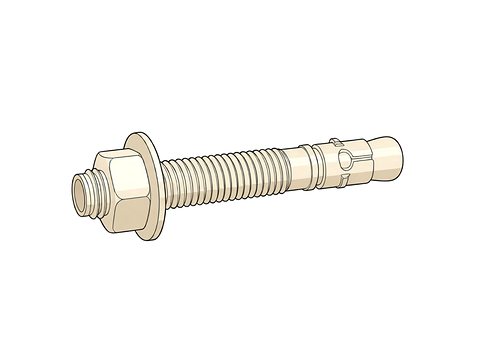
| Concrete wedge anchor | Wedge anchors feature external machine threads with a nut and washer and expand via an independent clip as the nut is torqued, whereas split-drive anchors have no threads and are purely hammer-driven. Wedge anchors expand by torquing an external nut over a threaded stud, whereas pin-drive anchors expand by hammering a central drive pin. |
| Split-ribbed plastic screw drywall anchor | Split-ribbed screw anchors require driving a threaded wood/sheet-metal screw to expand, whereas drive-pin anchors expand by driving a smooth non-threaded pin directly inward. |
| Drive-style hollow wall anchor (Molly bolt) | Molly anchors use a machine screw that draws an internal nut backward to collapse metal legs behind drywall, rather than driving a central pin outward. |
| sleeve anchor | Sleeve anchors expand via a cone pulled into a sleeve when a bolt or nut is tightened, rather than driving a central pin. |
Also called
split drive concrete anchorpre-expanded anchorslam-it anchorNail drive anchorPin drive expansion anchor; hammer drive pin anchorPreloaded shelf bracket anchor pinstrike anchorsplit bolt anchor
Good to know
Split drive anchors are single-use and non-removable (tamper-proof) permanent fasteners once installed in concrete. Because expansion is pre-formed into the shank, they must only be installed in solid base materials.
Related connections
Design with real parts
Crafti checks which parts connect, right in your browser.